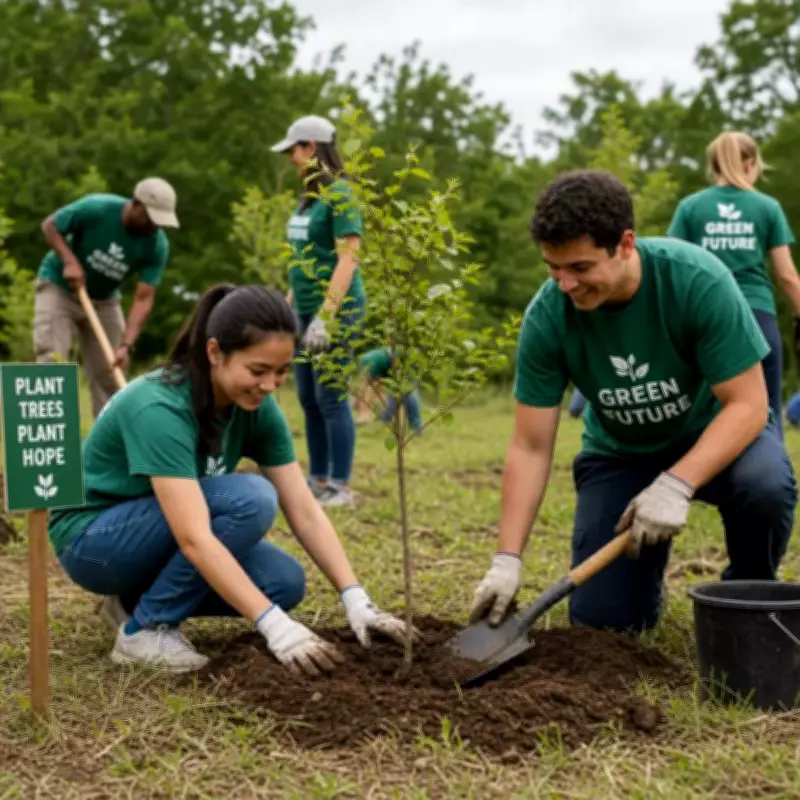
Dharwad: Creating more green cover through large-scale tree plantation is the most effective way to tackle rising temperatures caused by global warming, said noted environmentalist Prof SL Madivalar.
Inauguration of Cleanliness Drive
He was speaking after inaugurating a cleanliness drive and sapling plantation programme organised by Parisarakkaagi Naavu Sanghatane in association with the State Pollution Control Board at Gandhi Shanti Pratishthan.
Impact of Carbon Dioxide
Madivalar said rising levels of carbon dioxide in the atmosphere are contributing to climate change and irregular weather patterns, leading to crises in agriculture and other sectors. He explained that carbon dioxide traps heat by preventing reflected solar radiation from escaping into space, thereby increasing global temperatures.

He pointed out that people living in slums and economically weaker sections are suffering the most from rising heat, as they lack resources to protect themselves from extreme weather conditions.
Need to Expand Green Cover
Forests, oceans and wetlands absorb large quantities of carbon, but their extent is shrinking every year. Hence, expanding green cover and protecting natural ecosystems have become essential, he said.
Waste Management Challenges
Senior environmental officer I H Jagadish said nearly 450 tonnes of waste are generated daily in the Hubballi-Dharwad twin cities, making scientific disposal a major challenge. He said new solid waste management rules came into force on April 1, 2026, following the Supreme Court’s directions. Besides separating wet and dry waste, households must now further segregate dry waste into recyclable categories such as paper, plastic and metal.
Jagadish added that sanitary waste, including diapers, sanitary napkins and bandages, must be treated as biomedical waste, while items such as chemical containers, bulbs and paint cans should be classified as hazardous waste.
Association president Dr Rajendra Poddar also spoke. Deputy commissioner Snehal R planted a sapling in front of Gandhi Shanti Pratishthan as part of the programme.