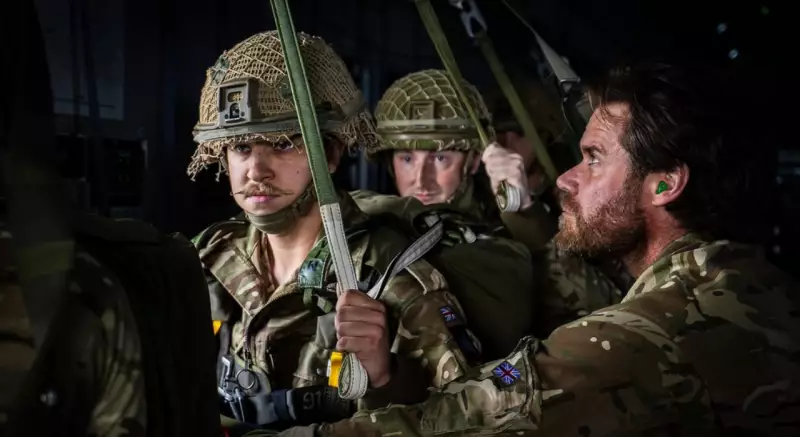
UK Conscription Debate Resurfaces Amid Global Tensions and Military Shrinkage
The United Kingdom government has firmly stated it has no plans to reintroduce conscription, with ministers repeatedly clarifying this position. However, escalating global tensions, a significantly reduced army size, and increasingly stark warnings from international allies have thrust this once-unthinkable concept back into public discourse. This revival of discussion brings with it a challenging question: what consequences would individuals face if they refused to serve under a potential conscription system?
Historical Context and Modern Fears
Conscription has been implemented in Britain only twice over the past 126 years, specifically during the two World Wars. Yet, fears of another major international conflict have intensified as Russia's invasion of Ukraine continues, the Trump administration's policies create uncertainty among allies regarding regions like Greenland and Iran, and senior Russian officials issue explicit nuclear threats toward Europe. Sergey Karaganov, a member of Russia's Council for Foreign and Defence Policy, recently warned that a Russian defeat could trigger nuclear escalation, stating that Europe would be "finished physically" if such a scenario unfolded.
Britain's Military Readiness Concerns
Against this volatile backdrop, concerns about Britain's military preparedness have become more acute. The British Army currently stands at its smallest size in decades, with approximately 73,000 regular full-time soldiers, a sharp decline from over 110,000 in 2010. While the government maintains there are "no plans" to revive conscription, national security analysts caution that a prolonged or expanded conflict would severely strain existing military forces. Both the regular Army and reserves have experienced significant reductions in recent years, raising questions about capacity during potential crises.

Potential Penalties for Refusal
This context explains why historians and defence commentators are now examining how conscription might function in contemporary Britain and what penalties could be imposed on those who refuse to comply. David Swift, a historian specializing in Britain's wartime mobilization, suggests that refusal would likely result in financial penalties rather than imprisonment. He cites three primary reasons for this approach:
- Limited prison capacity in the UK
- Practical difficulties in enforcement and legitimacy concerns
- The likelihood that modern conscription would incorporate financial incentives rather than pure coercion
Swift points to international models for potential guidance. In Greece, refusal to sign up for mandatory service has carried fines of €6,000 (approximately £5,200), though the country debated eliminating this penalty in 2019. Switzerland employs a different system where those who refuse military service pay an additional three percent in income tax for the duration of the service they would have otherwise completed. Swift notes that such fines create "a genuine disincentive not to serve" without resorting to imprisonment.
Exemptions and Historical Precedents
Conscription has never been applied uniformly throughout history. Exemptions have traditionally been granted to individuals whose civilian work was deemed more valuable to the war effort than frontline military service. Swift believes this logic would almost certainly apply again, particularly as Britain faces pressure to rebuild defence manufacturing and industrial capacity. Workers in critical sectors might be exempted or even directed into those industries instead of the armed forces.
Moral objection has also been recognized in past conflicts. During the World Wars, conscientious objectors were typically assigned non-combat roles in areas such as:
- Farming and agriculture
- Healthcare services
- Civil defence operations
- Forestry and conservation work
Only those who refused all war-related work faced imprisonment, demonstrating a historical accommodation for ethical objections.

Public Sentiment and European Context
Public reluctance forms a significant part of the current discussion. A 2024 YouGov poll revealed that 38 percent of individuals under 40 would refuse to serve if conscripted in a future world war, compared to 28 percent who indicated they would comply. Even if the UK faced imminent invasion threats, refusal rates remained nearly equal to willingness to serve.
Meanwhile, European neighbors are actively preparing their populations for potential crisis scenarios. Sweden, Finland, and Norway have issued guidance on surviving conflict-related emergencies, ranging from cyber-attacks to infrastructure disruptions. In the UK, local authorities have been urged to strengthen defences against potential Russian cyber-operations, with the National Cyber Security Centre warning of risks from large-scale denial-of-service attacks.
Military Leadership Perspectives
Senior military leaders continue to downplay the likelihood of conscription returning. Sir Richard Knighton, the Chief of the Defence Staff, has stated he "cannot see conscription returning in the short term" and that there are "no plans" for its introduction. However, he has also cautioned that "the situation in the world may deteriorate very significantly", leaving room for future reconsideration based on global developments.
For now, conscription remains a hypothetical scenario in Britain. Yet the fact that historians, pollsters, and security officials are openly discussing fines, exemptions, and enforcement mechanisms signals how dramatically the international climate has shifted. This discussion explains why a policy last implemented in 1945 has reemerged in Britain's uneasy contemporary conversations about war, security, and national preparedness in an increasingly uncertain world.