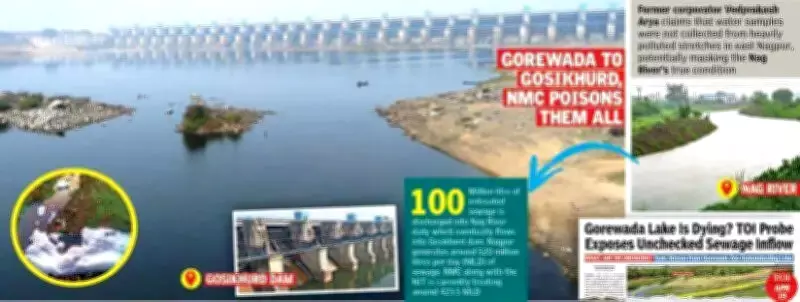
The Nagpur Municipal Corporation (NMC) has officially confirmed that untreated sewage flowing through the Nag River is ultimately polluting the Gosikhurd Dam, sparking serious environmental and public health concerns. This admission came in response to a query raised under the Right to Information (RTI) Act by former corporator Vedprakash Arya, as shared by the NMC's public health engineering department.
Key Findings from RTI Documents
Documents accessed through the RTI reveal that Nagpur generates approximately 520 million litres per day (MLD) of sewage. Of this, the NMC, along with the Nagpur Improvement Trust (NIT), currently treats around 423.5 MLD. While 320 MLD of treated sewage is sold to the Koradi and Khaparkheda thermal power stations, the remaining treated water is discharged back into the Nag River, which flows downstream into the Gosikhurd Dam. This data underscores a critical contradiction: even treated sewage is being released into the same river system that the civic body aims to clean, effectively defeating the purpose of setting up sewage treatment plants (STPs). At the same time, a significant portion of untreated sewage continues to enter the river due to gaps in infrastructure.
Lack of Health Surveys
The civic body's records acknowledge the downstream impact but expose a glaring gap — there is no documented health survey conducted by the NMC's health department to assess the effects of this pollution on populations dependent on Gosikhurd waters. Arya flagged serious concerns over the monitoring process, claiming that water samples were not collected from heavily polluted stretches in east Nagpur, potentially masking the river's true condition. The available test reports from September 2025, based on samples from relatively cleaner locations like Shankar Nagar, showed low biochemical oxygen demand (BOD) and chemical oxygen demand (COD) levels (below 5 mg/L), adequate dissolved oxygen, and minimal bacterial contamination. However, these isolated findings contrast sharply with the broader pollution scenario acknowledged by the NMC itself.

Ongoing Mitigation Efforts
To address the crisis, the NMC is implementing the Rs 1,926.99 crore Nag River Pollution Abatement Project, funded by the central and state governments. The project includes construction of STPs, laying over 500 km of sewer pipelines, and development of pumping stations to intercept sewage. It is being executed with consultancy support from Tata Consulting Engineers and is expected to be completed within five years. Despite these efforts, continuous discharge — both treated and untreated — into the Nag River highlights systemic inefficiencies. Notably, the Comptroller and Auditor General of India flagged similar concerns in its audit report for local bodies ending March 31, 2010, blaming the NMC for pollution affecting Gosikhurd.
Urgent Need for Accountability
The RTI findings bring into sharp focus the gap between infrastructure investment and environmental outcomes. With polluted flows continuing to reach a key irrigation source, the need for accountability, better monitoring, and course correction has become increasingly urgent.