

UPPCB Takes Action Against Paper Mills Over Delhi Waste Burning Allegations
The Uttar Pradesh Pollution Control Board (UPPCB) has escalated its response to mounting environmental concerns by issuing show-cause notices to six paper mills in Muzaffarnagar. This decisive action follows serious allegations that substantial quantities of waste from Delhi's notorious Ghazipur landfill—commonly referred to as the "garbage mountain"—have been transported and burned across 21 mills in the district.
Widespread Operations and Initial Complaints
Muzaffarnagar, which officially falls within the National Capital Region (NCR), hosts 35 operational paper mills. Officials initiated investigations after receiving numerous complaints from residents and activists about persistent "stink and pollution" in the area. The UPPCB has sought detailed explanations from most of these mills regarding their waste management practices.
Gitesh Chandra, the regional officer of UPPCB in Muzaffarnagar, confirmed the regulatory action, stating, "We are working continuously on such complaints. As many as six paper mills were given show-cause notices in this regard."

Industry Defense Versus Activist Allegations
Pankaj Agarwal, state president of the UP Paper Mill Association, acknowledged that over 20 mills are utilizing municipal waste material. However, he emphasized that this waste undergoes processing into refuse-derived fuel (RDF) before combustion—a practice he claims is permitted and environmentally regulated.
"We treat municipal waste before burning it," Agarwal explained. "There are treatment mechanisms in paper mills that convert it into RDF. It produces less pollution than coal. It is an environmentally friendly fuel which we put in the units' boilers. We also have online pollution monitoring systems, and a record of the air pollution is regularly sent to the UPPCB."
In stark contrast, local RTI activist Sumit Malik has vehemently disputed these claims. Malik alleges that mills are directly burning unprocessed garbage under the pretense of RDF usage, creating severe health hazards.
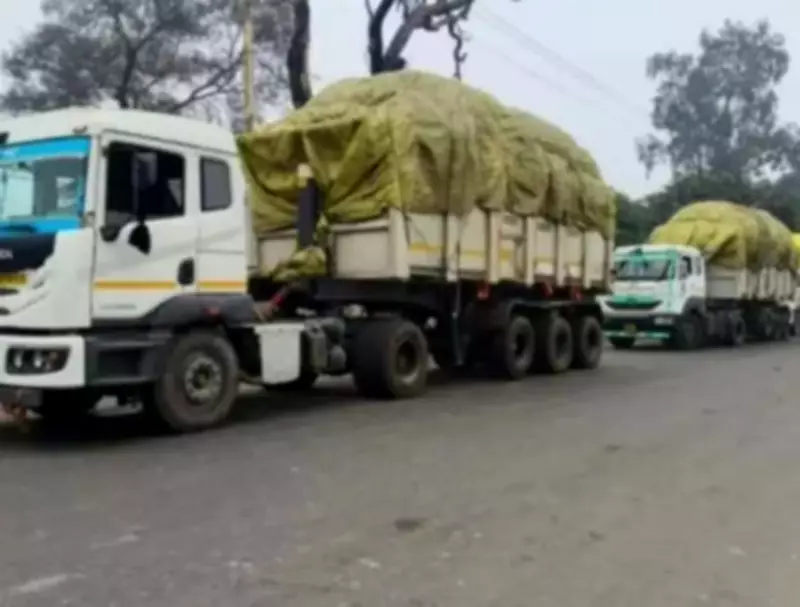
"Over 100 trucks loaded with waste from Delhi are coming here regularly," Malik claimed. "The garbage contains hazardous plastic and rubber, posing serious health risks. Repeated complaints to authorities in both Muzaffarnagar and Lucknow have been largely ignored."
Health Impacts and Regulatory Concerns
Malik further elaborated on the health consequences, stating that residents in rural areas of Muzaffarnagar are experiencing increased cases of cancer, asthma, respiratory problems, and eye irritation. He noted that during 2024-25, paper mill owners obtained permission from the Pollution Control Board in Lucknow to burn RDF, but this practice is being misused.
"Muzaffarnagar officially comes under the NCR region, where RDF burning is restricted," Malik pointed out. "Hence, continued burning of RDF here raises a lot of questions."
Community Resistance and Broader Context
The controversy has sparked significant community resistance. On March 19, activists from a farm organization intercepted a truck on Bhopa Road that was transporting waste from Delhi, highlighting growing public opposition to the practice.
This situation unfolds against the backdrop of Delhi's ongoing waste management crisis. The Ghazipur landfill receives thousands of tonnes of waste daily, leading to severe pollution, frequent fires, and substantial health concerns for nearby residents. In January 2025, the Supreme Court reprimanded the Municipal Corporation of Delhi for failing to comply with solid waste management directives, noting that approximately 3,000 tonnes of untreated waste continues to be dumped daily.
The UPPCB's show-cause notices represent a critical step in addressing these complex environmental and regulatory challenges, balancing industrial practices with public health protection in a sensitive ecological zone.






