Urban Coral Warriors Defy Climate Change in Miami's Waters
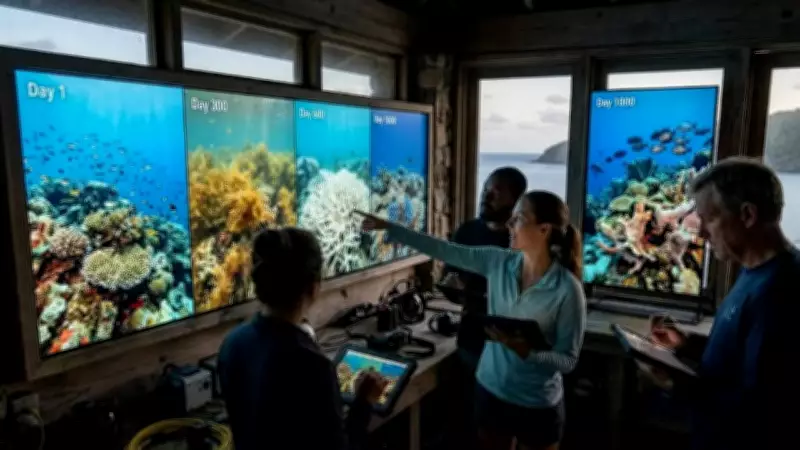
The Coral City Camera has captured what scientists are calling the world's longest underwater time-lapse observation, running continuously from 2023 through 2026. This remarkable footage reveals a stunning paradox: while offshore coral reefs in the pristine Florida Keys suffered catastrophic bleaching and mortality during the unprecedented 2023 heatwave, a resilient group of 'urban warrior' corals thrived in the unlikely environment of downtown Miami.
The Stark Contrast Between Urban and Offshore Reefs
The most significant revelation from the 1,000-day time-lapse is the dramatic difference between urban and offshore reef survival rates. Data from the Coral City Camera shows that corals attached to concrete seawalls and subjected to cruise ship wake turbulence are not just surviving but actually outsmarting climate change. Meanwhile, the supposedly healthier offshore environments of the Florida Keys experienced massive die-offs during the same period.
Scientists believe these urban corals have survived through what they call a 'trial by fire' adaptation process. The very conditions that would typically kill offshore reefs—high turbidity, fluctuating pH levels, and stagnant heat—have instead created an environment where certain coral strains have developed remarkable resilience.

The Unprecedented Thermal Tolerance of ACER 'Ventura'
Among the urban survivors, researchers have identified a particularly remarkable strain: the ACER 'Ventura' phenotype of Staghorn coral (Acropora cervicornis). According to the National Oceanic and Atmospheric Administration (NOAA), this 'super-coral' has demonstrated an astonishing thermal tolerance range, remaining healthy in temperatures ranging from 15.5 degrees Celsius to 32.6 degrees Celsius.
This same species has shown extraordinary growth patterns, with biomass increasing thousands of times in single branches over just four years. Research published in NCBI/PMC databases confirms that these genetic lineages possess sufficient genetic plasticity to meet resilience standards for tolerating acute thermal volatility.
How Water Flow Protects Urban Coral Ecosystems
The time-lapse footage revealed another surprising factor in urban coral resilience: constant water movement. The hydrodynamic turbulence created by maritime activity and cruise ship wakes appears to prevent the development of stagnant temperature zones while simultaneously introducing fresh nutrients through water flow.
This phenomenon, which scientists are calling 'anthropogenic cooling,' may create microclimates along urban coastlines that provide marine life with some protection from the most severe consequences of climate change. The repetitive exposure to wake and maritime activity, once thought harmful, may actually be contributing to coral survival in modified human-made environments.
The Miami Model: A Blueprint for Global Reef Restoration
The success of Miami's urban corals has sparked what conservationists are calling the 'Miami Model' for reef restoration. According to studies published on ResearchGate, scientists are pursuing the concept of 'Assisted Evolution' by identifying these urban-adapted strains and using them to nursery-grow coastal restoration populations.
The strategy involves seeding decaying offshore reefs with juvenile strains that are offspring of the surviving urban corals. These hardier juveniles, proven more resilient than adult populations on populated reefs, could provide long-term viability for ecosystems struggling with warming waters worldwide.
As the world continues to warm at an alarming rate, these urban warrior corals growing in the unlikely environment of downtown Miami may hold crucial lessons for preserving and restoring coral reefs globally. Their ability to thrive where others perish offers both hope and practical strategies for marine conservation in an increasingly challenging climate.