

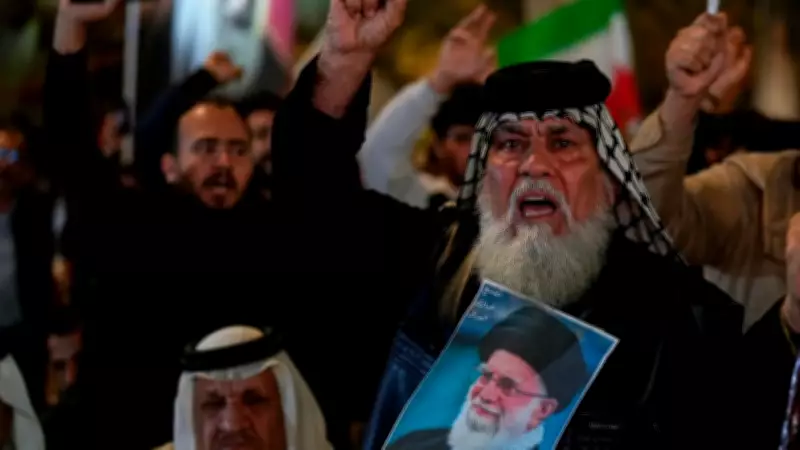
US-Israel Coordinated Strike Eliminates Iran's Supreme Leader, But Regime Stability Persists
A joint military operation by the United States and Israel has resulted in the death of Iran's Supreme Leader, Ayatollah Ali Khamenei, marking a significant escalation in the ongoing conflict. The attack, part of President Donald Trump's Operation Epic Fury, targeted high-value objectives as the administration openly advocates for regime change in Tehran. However, a classified intelligence assessment suggests that toppling Iran's entrenched establishment remains a formidable challenge.
Intelligence Report Casts Doubt on Regime Change Prospects
According to a report by the National Intelligence Council, confirmed by sources to The Washington Post, even a large-scale US military assault would likely fail to dismantle Iran's powerful clerical and military institutions. The assessment, completed shortly before the war began on February 28, analyzed various scenarios, concluding that the system would maintain functionality despite leadership losses.
The report emphasizes that Iran has established robust procedures to ensure continuity of power, making a swift transition to opposition control improbable. This analysis reflects the collective judgment of Washington's 18 intelligence agencies, though the White House has not confirmed whether President Trump reviewed it prior to authorizing the operation.

White House Objectives and Expanding Conflict
White House spokeswoman Anna Kelly outlined the administration's goals, stating, "President Trump and the administration have clearly outlined their goals with regard to Operation Epic Fury: destroy Iran’s ballistic missiles and production capacity, demolish their navy, end their ability to arm proxies, and prevent them from ever obtaining a nuclear weapon." She added that the Iranian regime is being "absolutely crushed."
Since the inception of hostilities, the conflict has broadened, with reports of submarine movements in the Indian Ocean and missile engagements near NATO ally Turkey. President Trump has intensified demands for Iran's unconditional surrender, even suggesting a role in selecting the country's next leader, a notion firmly rejected by Iranian officials.
Succession Dynamics and Internal Resistance
Amidst ongoing airstrikes and naval bombardments, Iran's succession process is underway, overseen by the Assembly of Experts. Speculation points to Mojtaba Khamenei, the late leader's son, as a potential successor, supported by the Islamic Revolutionary Guard Corps but opposed by figures like Ali Larijani.
Iran's Parliament speaker Mohammad Bagher Ghalibaf dismissed external interference, asserting that Iran's future will be determined solely by its people. Meanwhile, experts like Suzanne Maloney of the Brookings Institution note that the intelligence assessment demonstrates a nuanced understanding of Iran's resilient political structures.
Expert Analysis on Regime Resilience
Holly Dagres, a senior fellow at the Washington Institute for Near East Policy, highlighted the ideological resistance within Iran's clerical establishment, stating, "Bending the knee to Trump would go against everything they stand for. The upper echelons are ideological, and their modus operandi is to resist American imperialism."
The report also notes that US intelligence has not observed significant internal uprisings or governmental fractures that could precipitate regime collapse. Historical precedents, such as the forceful suppression of recent economic protests, underscore the security forces' capacity to maintain control.
As the conflict enters its second week, the strategic landscape remains complex, with the intelligence community cautioning that Iran's enduring institutions may outlast immediate military pressures, challenging the administration's regime change aspirations.






