

US Deploys 3,500 Marines to West Asia, Escalating Tensions with Iran
In a significant military escalation, the United States has dispatched the 31st Marine Expeditionary Unit (MEU) from Sasebo, Western Japan, to the active West Asian combat theatre. This deployment involves 3,500 marines and sailors, as Washington intensifies efforts to reopen the strategically vital Strait of Hormuz.
The critical waterway, through which approximately 20% of the world's oil and gas flows to global consumers, has been closed by Iran in a bid to exert pressure and halt ongoing conflicts. This move by Tehran has triggered a robust response from the US, aiming to secure the strait and restore international energy supplies.
Structure and Capabilities of the 31st Marine Expeditionary Unit
The 31st MEU is a specialized rapid response force designed to handle diverse contingencies, ranging from combat operations to natural disaster relief. As the only forward-deployed unit among the seven MEUs, it comprises a reinforced marine infantry battalion and an aviation element, all embarked on a set of amphibious assault ships as part of an expeditionary strike group.

At its core is a heavily armed Marine Corps infantry battalion, trained and equipped for amphibious or helicopter-based beach assaults. This unit is supported by armored vehicles, artillery, and air defense systems, enabling it to hold ground for up to 15 days. Its primary role is to establish a bridgehead, facilitating the arrival and expansion of additional forces in the theatre of operations.
USS Tripoli and Naval Air Power
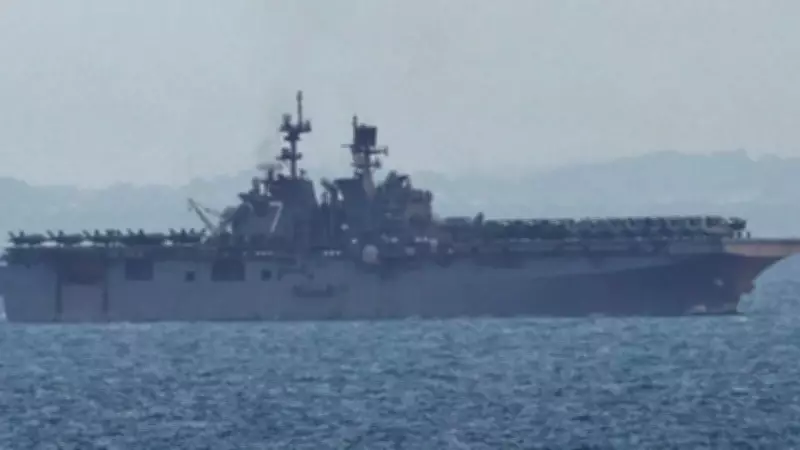
The entire force is centered around the USS Tripoli, an America-class amphibious assault ship that functions as a mini-aircraft carrier. Currently operating in West Asia, the USS Tripoli is equipped with 20 F-35 fighter jets capable of vertical take-off and landing, enhancing its operational flexibility in confined maritime environments.
In addition to these advanced fighters, the ship's air wing includes MV-22 Osprey aircraft and MH-60S helicopters, similar to those used by the Indian Navy. The amphibious ready group is further supported by the USS San Diego and USS New Orleans, forming a formidable naval presence in the region.
Marine Air Ground Task Force Doctrine
The U.S. Marine Corps operates under the Marine Air Ground Task Force (MAGTF) doctrine, which integrates air and ground forces under a unified command structure. This approach allows the corps to leverage its own air arm and naval support effectively, with all elements reporting to a MAGTF commander, typically a Colonel-ranked officer. This integrated command enhances coordination and operational efficiency in complex combat scenarios.
Strategic Implications for Iran and the Persian Gulf
The amphibious nature of the MEU provides the theatre commander with multiple options in the Persian Gulf. The U.S. has previously threatened Iran's Kharg Island, and the potential capture of Iranian islands near the Strait of Hormuz could be a key strategy to reopen the critical waterway. This deployment places immense pressure on Tehran, forcing it to defend its extensive coastline and outlying islands, thereby stretching its already strained military resources amid ongoing conflicts.
As tensions mount, the arrival of 3,500 troops aboard the USS Tripoli fuels speculation about potential U.S. ground operations in Iran, highlighting the escalating stakes in this volatile region. The move underscores Washington's commitment to maintaining maritime security and countering Iranian actions that threaten global energy supplies.






