

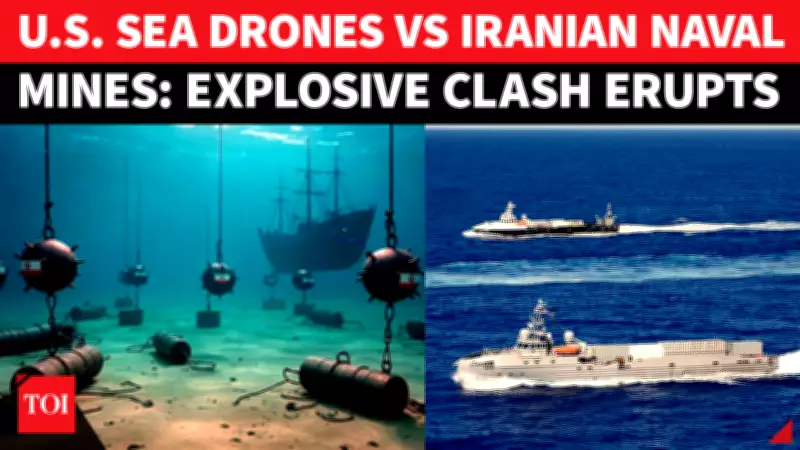
US Navy Launches Robotic Mine-Clearing Operation in Strategic Strait
The United States Navy has commenced a sophisticated, technology-driven campaign utilizing autonomous sea drones and robotic systems to identify and neutralize underwater mines in the highly sensitive Strait of Hormuz. This strategic maneuver unfolds against a backdrop of intensifying geopolitical friction with Iran, which has repeatedly issued warnings regarding the normalization of maritime traffic in the region.
High Stakes for Global Energy and Shipping Lanes
The Strait of Hormuz serves as a critical maritime chokepoint, facilitating the transit of approximately one-fifth of the world's total oil shipments. Any significant disruption to this vital waterway could precipitate severe global energy shocks and economic instability. The US operation aims to preemptively secure these lanes, but it simultaneously raises the specter of a broader military confrontation.
Iran has explicitly conditioned the resumption of normal shipping activities on the lifting of the US naval blockade, a demand that Washington has thus far rejected. This deadlock has created a volatile environment where even defensive actions, such as mine-clearing, are perceived as provocative escalations.

The "Ghost War" of Autonomous Systems
Dubbed by some analysts as an "unstoppable ghost war," the conflict is increasingly characterized by the deployment of unmanned systems. The US Navy's use of sea drones represents a significant evolution in naval warfare, allowing for persistent surveillance and engagement in hazardous environments without direct risk to human personnel.
However, this technological advantage does not diminish the risks of miscalculation. As robotic sweeps intensify throughout the strait, the potential for an accidental clash or a deliberate retaliatory strike by Iranian forces remains a grave concern for international observers and energy markets alike.
Broader Regional Tensions and Global Implications
The mine-clearing operation is not an isolated incident but part of a wider pattern of heightened US-Iran hostilities. Recent months have witnessed:
- Increased naval patrols and standoffs in the Persian Gulf.
- Verbal threats and warnings exchanged between military and political leaders.
- A palpable sense of urgency in global capitals regarding energy security.
The situation underscores the fragile nature of security in the Middle East and the profound global consequences of regional conflicts. As the US robotic fleet continues its operations, the world watches anxiously, aware that the stability of international oil supplies hangs in the balance.






