Vadodara Conducts Detailed Crocodile Census to Study Urban Reptile Behavior
The Gujarat Forest Department and the zoology department of Maharaja Sayajirao University of Baroda (MSU) have recently concluded a comprehensive two-day crocodile census along a 17.5-kilometer stretch of the Vishwamitri river in Vadodara. This initiative, finalized on Saturday, February 7, 2026, is designed to provide in-depth insights into the behavioral patterns and population dynamics of marsh crocodiles, commonly known as muggers, within the city's urban environment.
Focus on Behavioral Analysis Over Mere Numbers
Led by Ranjitsinh Devkar, an assistant professor of zoology at MSU, the census prioritizes understanding the crocodiles' habits rather than simply counting them. The research aims to analyze five key aspects: population structure by age, size, and class; distribution across zones; occupancy surveys; basking behavior and sites; and den locations. This approach builds on the previous census conducted in 2025 by the Gujarat Ecological Education and Research (GEER) Foundation, which recorded 442 crocodiles in a 25-kilometer stretch and noted a high density in busier city areas.
Devkar emphasized that the exercise is crucial for profiling the reptiles' characteristics, including how they fetch food, propagate, and build dens. "Our focus is on classifying crocodiles as per size and distribution to identify high-risk zones and recommend measures to minimize human-crocodile conflicts," he stated.

Impact of River Dredging on Crocodile Behavior
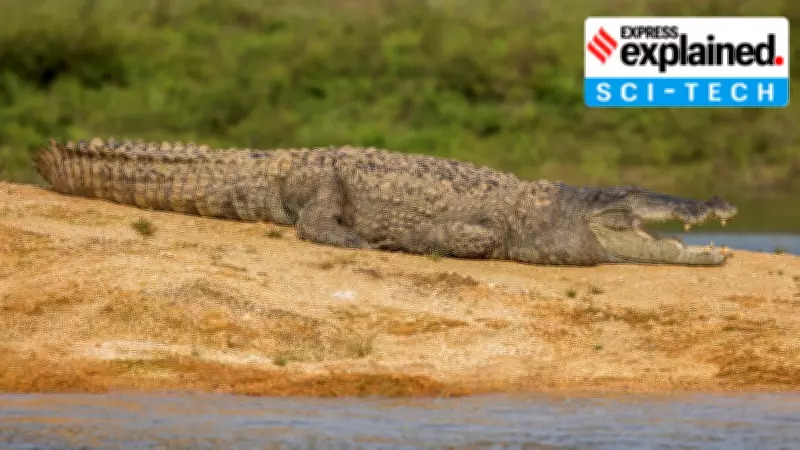
The census follows the Vadodara Municipal Corporation's completion of the Vishwamitri Flood Mitigation Project, a Rs 1,200-crore initiative involving dredging and desilting of the river. This environmental change has led to observable shifts in crocodile behavior. Researchers noted an increase in basking crocodiles and the presence of large freshwater turtles, phenomena attributed to the removal of thick vegetation and debris from riverbanks.
Devkar explained that the data will help compare patterns before and after the river cleanup. "We will study if crocodiles have developed a preference for open banks or if earlier sightings were hindered by dense vegetation," he said. Additionally, the census will assess spatial fidelity—whether crocodiles return to familiar basking sites and dens despite environmental disturbances.
Methodology and Findings of the Census
The census divided the 17.5-kilometer river stretch into ten sections, each monitored by a team of five individuals, including MSU students, NGO volunteers, and forest guards. Techniques involved daytime sightings and nocturnal counts using the "colour code" method to spot crocodiles' distinctive fire-red eyes. Crocodiles were classified by size: less than 1 meter (juveniles), 1-3 meters (adults), and over 3 meters (large adults), with those 2.5-3 meters considered potentially dangerous.
Findings from the 2025 census indicated that crocodiles were clustering in urban areas, deviating from their natural scattered distribution. The current data analysis will identify high-risk zones based on the concentration of larger crocodiles, aiding in conflict prevention strategies.
Significance for Urban Wildlife Management
This census underscores Vadodara's unique status as a city hosting mugger crocodiles in their natural habitat amidst human populations. By understanding reptile behavior, authorities can better manage urban wildlife and mitigate risks. The research contributes to broader ecological studies and informs future conservation efforts in similar urban-riverine ecosystems across India.