

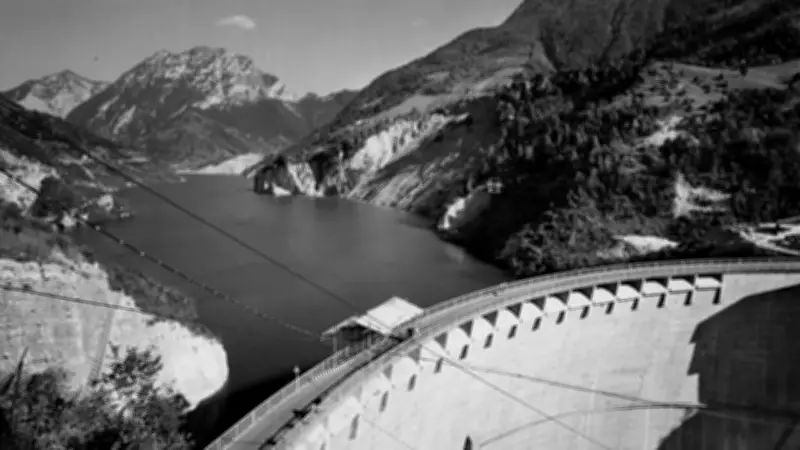
The Vajont Dam Catastrophe: A Monument to Human Hubris
On October 9, 1963, a colossal engineering achievement in the Italian Alps transformed into a chilling monument to human overconfidence. The Vajont Dam, then the world's tallest structure of its kind, faced an unimaginable catastrophe when a massive 260 million-cubic-meter landslide from Monte Toc crashed into its reservoir.
The Engineering Marvel and Its Fatal Flaw
The Vajont Dam was constructed as a thin-arch concrete dam reaching an impressive height of 262 meters (860 feet). Completed in 1959, it stood as the highest dam of this type globally, located across the deep, narrow gorge carved by the Vajont River. This engineering feat was celebrated as a cornerstone of Italy's post-war industrial revival, symbolizing progress and technological advancement.
However, the dam's excellent engineering was fatally undermined by a critical oversight: the geological instability of the surrounding canyon walls, particularly the side of Monte Toc adjacent to the reservoir. This fundamental miscalculation would prove disastrous.

Geological Warnings Ignored
As early as 1960, when the reservoir began filling, ominous signs emerged. Monte Toc exhibited alarming movement, with a massive M-shaped crack developing on its side, extending over 2 kilometers. This fracture indicated that a substantial block of earth was gradually separating from the mountain.
Engineers monitoring the situation observed a direct correlation between the reservoir's water level and the mountain's displacement rates. The higher the water level rose, the more rapidly the mountain moved. Despite these clear warning signs, decision-makers attempted to manage the slide through gradual adjustments to the reservoir's water level, rather than acknowledging the imminent risk of catastrophic collapse.
45 Seconds of Unprecedented Destruction
The catastrophic failure occurred on the night of October 9, 1963. In just 45 seconds, approximately 260 million cubic meters of rock—nearly twice the volume of water in the reservoir—slid off Monte Toc into the lake. The speed of this collapse was so immense that the rock acted as a piston, violently displacing the water and generating a megatsunami that reached staggering heights of 250 meters.
This 250-meter wall of water bifurcated upon impact. One segment surged upstream, devastating villages in its path, while the other segment rushed over the dam's crest with tremendous force, hurtling into the valley below. According to the Association of State Dam Safety Officials (ASDSO), the town of Longarone was completely erased within minutes, claiming nearly 2,000 lives. The force unleashed was comparable to two Hiroshima atomic bombs.
The Aftermath and Enduring Lessons
The Vajont Dam itself withstood the impact, but the human and environmental toll was devastating. The reservoir was left dry, and the surrounding landscape was forever altered. This tragedy serves as a stark reminder of the consequences of prioritizing technological ambition over environmental and geological realities.
The Vajont Dam disaster stands as one of history's most poignant examples of engineering hubris. It underscores the critical importance of heeding geological warnings and conducting comprehensive risk assessments in major infrastructure projects. The pursuit of progress, when divorced from respect for natural forces, can lead to unimaginable tragedy, leaving behind a legacy of loss and a cautionary tale for future generations.






