

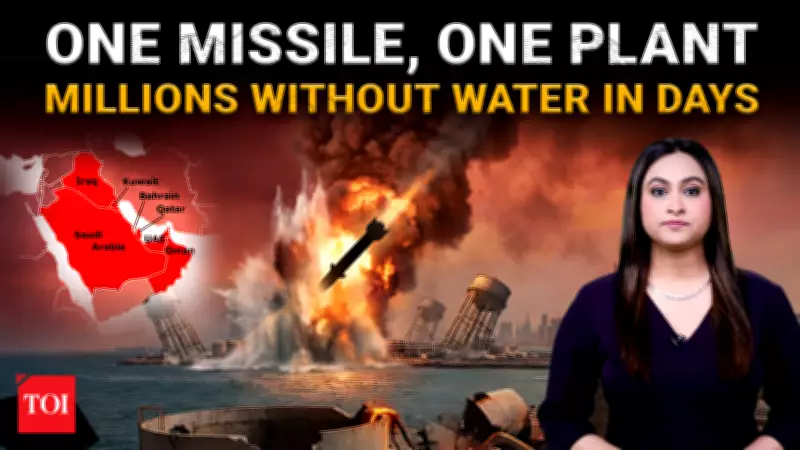
Water, Not Oil, Emerges as Critical Strategic Commodity in Iran Conflict
The global focus has traditionally centered on oil prices and tanker routes during Middle Eastern conflicts, but the escalating tensions between Iran and the United States reveal a more immediate and fundamental threat: water security. Across the Arabian Gulf, major urban centers including Dubai, Kuwait City, and Manama depend almost entirely on desalinated seawater for their survival. Over four hundred coastal desalination plants convert seawater into potable water, serving tens of millions of residents. Without these facilities, taps would run dry within a matter of days, creating an unprecedented crisis.
Targeting Water Infrastructure: A Dangerous Escalation
Recent military strikes have already occurred near significant desalination facilities in the United Arab Emirates, Bahrain, and Oman. Both Iran and the United States have exchanged accusations regarding the targeting of water infrastructure, raising alarms among international observers. Experts emphasize that if desalination plants become legitimate military targets, the region could face a humanitarian catastrophe far beyond what any oil reserve disruption could cause. The strategic importance of water is now overshadowing traditional energy concerns in this conflict.
The Fragile Dependence on Desalination
The Gulf region's reliance on desalination is profound. These plants are not merely supplementary sources; they are the lifeline for entire populations. Cities like Dubai have built their modern infrastructures around consistent water supply from desalination. Any disruption could lead to rapid dehydration, sanitation failures, and economic collapse. The vulnerability of these facilities to military action highlights a critical weakness in regional security planning.

The immediate risk involves direct attacks on desalination plants, which could cripple water supply chains overnight. Long-term consequences include potential environmental damage from damaged facilities leaking chemicals into the Gulf, exacerbating the crisis. International bodies are calling for the protection of water infrastructure under humanitarian law, but the escalating conflict threatens to override such safeguards.
Expert Warnings and Global ImplicationsSecurity analysts warn that targeting water resources could set a dangerous precedent in modern warfare, where civilian necessities become battlegrounds. The global implications extend beyond the Gulf, as similar desalination-dependent regions worldwide watch with concern. This shift from oil to water as a strategic commodity underscores changing priorities in geopolitical conflicts, where survival resources take precedence over economic ones.

- Over 400 desalination plants serve tens of millions in the Gulf.
- Strikes have occurred near facilities in UAE, Bahrain, and Oman.
- Iran and the US accuse each other of targeting water infrastructure.
- Experts predict humanitarian catastrophe if plants are hit.
- Water security now rivals oil as a key strategic concern.





