The Western Ghats: An Ancient Ecological Marvel
Stretching for over 1,600 kilometres along India's western coastline, the Western Ghats stand as one of the planet's oldest mountain ranges, predating even the mighty Himalayas. This majestic chain has earned dual recognition as a UNESCO World Heritage Site and as one of the world's eight "hottest hotspots" of biological diversity. Its ecological significance for peninsular India cannot be overstated, influencing weather patterns, water systems, and regional climates.
A Sanctuary of Endemism
What truly distinguishes the Western Ghats is its extraordinary level of endemism. A remarkable percentage of its amphibians, reptiles, plants, and numerous mammal and bird species exist exclusively within this mountain range, found nowhere else on the globe. This biological uniqueness has evolved over millions of years within diverse microhabitats including isolated valleys, high-altitude shola forests, lateritic plateaus, and dense evergreen rainforests.
Five Iconic Endemic Species of the Western Ghats
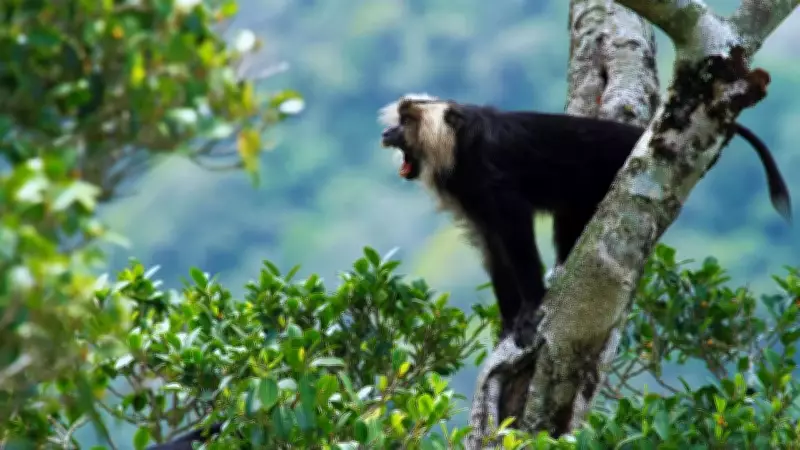
Lion-tailed Macaque
The lion-tailed macaque represents one of India's most distinctive primates, immediately recognizable by its silver-white mane framing a black face and its characteristic lion-like tail. These primates inhabit the tropical evergreen rainforests spanning Kerala, Karnataka, and Tamil Nadu. Highly arboreal by nature, they spend the majority of their lives in the upper canopies of undisturbed forests. Their diet consists primarily of fruits, insects, and small vertebrates, making them heavily dependent on intact forest ecosystems for survival.

Nilgiri Tahr
Often celebrated as the "mountain goat of South India," the Nilgiri tahr demonstrates remarkable adaptation to steep cliffs and high-altitude grasslands. These sure-footed herbivores graze across the Montane grasslands and shola ecosystems of the Nilgiri Hills and Anamalai ranges in Kerala and Tamil Nadu. As an exclusive resident of the Western Ghats, spotting these creatures in their natural habitat represents a special wildlife experience. Conservation efforts have helped this species recover from historical hunting pressures and habitat destruction, transforming it into a symbol of Western Ghats conservation success.
Malabar Giant Squirrel
The Malabar giant squirrel stands out as one of the Western Ghats' most visually striking mammals, with its vibrant maroon, cream, and dark brown fur creating a dramatic appearance. This large arboreal rodent inhabits evergreen and moist deciduous forests across Maharashtra, Karnataka, Kerala, and Tamil Nadu. Known for its impressive leaping abilities between trees, it constructs substantial leafy nests high in the forest canopy and rarely ventures to the forest floor. The continuity of forest habitats proves crucial for the survival of this remarkable species.
Amboli Toad
Discovered as recently as 2010, the Amboli toad ranks among India's rarest amphibians. Named after its exclusive habitat around Amboli in Maharashtra's northern Western Ghats, this small, vividly patterned toad occupies lateritic plateaus and forested hill slopes. Its extremely limited geographical distribution has earned it a Critically Endangered classification by conservation authorities. The species emerges briefly during monsoon seasons for breeding purposes, making it particularly vulnerable to habitat disturbances from tourism and land-use changes affecting its plateau environments.
Nilgiri Wood Pigeon
The Nilgiri wood pigeon presents a prized sighting for dedicated birdwatchers, distinguished by its large size and distinctive checkered neck patch. This forest pigeon favors high-elevation evergreen and shola forests across Kerala, Tamil Nadu, and Karnataka, typically remaining within dense forest interiors where it is more frequently heard than seen. Ongoing threats from habitat fragmentation and montane forest degradation have resulted in its classification as a Vulnerable species according to IUCN assessments.
Conservation Significance
The Western Ghats' ecological importance extends far beyond its scenic beauty. This mountain range serves as:

- A critical watershed for numerous peninsular rivers
- A climate regulator for southern India
- A living laboratory for evolutionary biology
- A biodiversity reservoir with global significance
Preserving this ancient mountain ecosystem remains essential not only for its endemic species but for the ecological balance of the entire region. The continued protection of these habitats ensures the survival of unique species that have evolved over millions of years within this extraordinary landscape.