

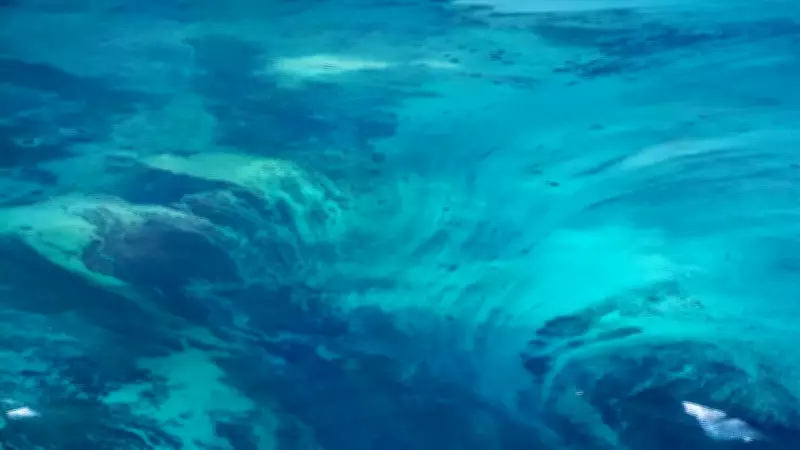
The Hidden Giant: Discovering Earth's Largest Waterfall
When most people imagine the world's largest waterfall, they envision dramatic land-based cascades like Venezuela's Angel Falls or Africa's thunderous Victoria Falls. However, neither of these spectacular surface features actually holds the title for the planet's largest waterfall. That distinction belongs to a remarkable underwater phenomenon that few will ever witness firsthand: the Denmark Strait cataract.
What is the Denmark Strait Cataract?
Located in the Denmark Strait between Greenland and Iceland, this immense underwater cascade represents one of nature's most powerful hidden forces. According to research from the National Ocean Service and National Oceanic and Atmospheric Administration, this remarkable feature forms through complex oceanographic processes rather than the visible cliff drops we associate with traditional waterfalls.
The Denmark Strait cataract occurs when extremely cold, dense water from the Arctic region flows southward from the Nordic Seas. As this frigid water encounters warmer, less dense water in the Irminger Sea (part of the North Atlantic Ocean), it sinks dramatically beneath the surface. This creates a cascading effect along the seafloor where dense water flows over a submarine ridge and plunges into deeper ocean basins.

Staggering Scale and Measurements
Though completely invisible from the ocean surface, the Denmark Strait cataract operates on a scale that dwarfs all land-based waterfalls. Scientific measurements reveal astonishing dimensions:
- Height: The cataract drops approximately 3,500 meters (about 11,500 feet), making it more than three times taller than Angel Falls, which stands at 979 meters.
- Width: This underwater cascade stretches across approximately 480 kilometers (about 300 miles) of the Denmark Strait.
- Flow Rate: The waterfall carries an estimated 3 to 5 million cubic meters of water per second, creating unprecedented volume.
These extraordinary figures establish the Denmark Strait cataract as not only Earth's tallest waterfall but also its most voluminous, redefining our understanding of what constitutes a "largest" waterfall.
The Science Behind Underwater Waterfalls
The formation of the Denmark Strait cataract centers on thermohaline circulation, the massive movement of ocean water driven by temperature ("thermo") and salinity ("haline") differences. In polar regions, ocean water becomes extremely cold and salty. When sea ice forms, salt concentrates in the remaining water, increasing its density significantly.
This cold, dense water naturally sinks beneath warmer, fresher water due to gravity. In the Denmark Strait specifically, dense water forms in the Arctic and Nordic Seas before flowing southward toward the North Atlantic. Upon reaching the submarine ridge in the strait, this dense water spills over the ridge and plunges downward into deeper ocean basins, creating a cascading current along the ocean floor.
While this process lacks the visible drama of surface waterfalls, it operates on the same fundamental principle of water moving downward due to gravitational forces, just occurring entirely beneath the ocean's surface.
Why This Waterfall Remains Invisible
Unlike iconic waterfalls like Angel Falls or Victoria Falls that can be observed directly from land or boats, the Denmark Strait cataract lies hidden beneath hundreds of meters of ocean water. Oceanographers study this phenomenon using specialized equipment including:
- Deep-sea instruments designed for extreme pressure environments
- Advanced temperature and salinity sensors
- Submarine mapping technology
- Long-term monitoring arrays deployed across the strait
These sophisticated tools allow scientists to measure the speed, temperature, and density of the cascading water, revealing the immense power of this hidden natural wonder.

Redefining Our Understanding of Waterfalls
The Denmark Strait cataract challenges conventional definitions of waterfalls. While terrestrial waterfalls feature visible vertical drops over cliffs, this underwater phenomenon demonstrates that the same gravitational principles create cascades even in ocean depths. When evaluated by both height and volume, this underwater cascade easily surpasses any land-based waterfall.
Angel Falls may hold the record for tallest uninterrupted waterfall on land, and Victoria Falls may be celebrated for its impressive width and thunderous spray, but neither compares to the scale of the underwater giant flowing between Greenland and Iceland. This remarkable feature reminds us that Earth's most powerful natural phenomena often remain hidden from casual observation, requiring scientific exploration to reveal their true magnitude and significance.





