

Iraqi Resistance Group Claims Massive Drone Assault on US Military Installations
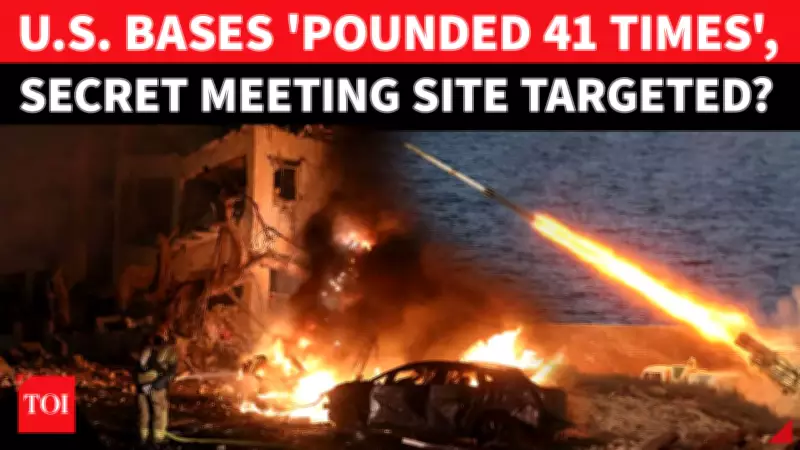
The Islamic Resistance in Iraq has asserted responsibility for what it describes as its largest coordinated offensive to date, launching a staggering 41 drone strikes against United States military bases across Iraq and the wider Middle East region within a single 24-hour period. This unprecedented wave of attacks marks a significant escalation in the ongoing tensions between Iran-aligned factions and American forces stationed in the area.
Telegram Statements Confirm Drone Deployments and Civilian Warnings
In detailed statements disseminated through the encrypted messaging platform Telegram, the militant group confirmed the deployment of dozens of unmanned aerial vehicles (UAVs) targeting multiple US installations. The Islamic Resistance also released purported footage showcasing drone launches and issued explicit warnings to civilians to avoid proximity to military sites, underscoring the operational scale and planned nature of the assaults.
Strikes Extend to Bahrain, Amplifying Regional Security Concerns
Reports indicate that the coordinated strikes were not confined to Iraqi territory but extended to targets associated with the United States in the Kingdom of Bahrain, a key American ally hosting the US Navy's Fifth Fleet. This expansion of the conflict zone highlights the broadening geographical scope of the resistance operations and intensifies fears of a wider regional conflagration involving multiple state and non-state actors.

The Islamic Resistance has explicitly stated that its military operations will escalate further in the coming days, directly challenging US military presence and influence in the Middle East. This declaration raises alarm among international observers and regional governments, who fear that continued provocations could trigger a full-scale regional war, drawing in major powers and destabilizing global energy supplies and security architectures.
Analysts Warn of Potential Broader Conflict Involving Iran and Its ProxiesSecurity analysts and geopolitical experts are closely monitoring the situation, noting that the Islamic Resistance in Iraq is widely regarded as an umbrella organization for several Iran-backed militias. The timing and scale of these attacks suggest a coordinated strategy potentially orchestrated by Tehran to pressure Washington amid ongoing diplomatic stalemates and military posturing. The involvement of Bahrain further complicates the regional dynamics, implicating Gulf Cooperation Council (GCC) states in the escalating conflict.
Implications for US Military Strategy and Regional Stability
The successful execution of 41 drone strikes in one day demonstrates a significant enhancement in the capabilities and coordination of Iran-aligned resistance groups. This development poses serious challenges to US air defense systems and force protection measures in the region. Military planners in Washington and allied capitals are now compelled to reassess deployment strategies and counter-drone technologies to mitigate future threats.
Furthermore, the public claims and footage releases via Telegram represent a sophisticated information warfare campaign aimed at demoralizing adversaries and rallying support among sympathetic populations. The group's warnings to civilians also indicate an attempt to shape the narrative around collateral damage and humanitarian concerns, adding a layer of psychological pressure to the kinetic attacks.
International Community Urges De-escalation and Diplomatic SolutionsAs news of the assaults spreads, calls for restraint and dialogue are emerging from various international quarters, including the United Nations and regional organizations. However, with the Islamic Resistance vowing further escalation and the United States likely to consider retaliatory measures, the path to de-escalation appears fraught with obstacles. The coming days will be critical in determining whether this cycle of violence can be contained or if it will spiral into a broader, more destructive regional war with global repercussions.






