

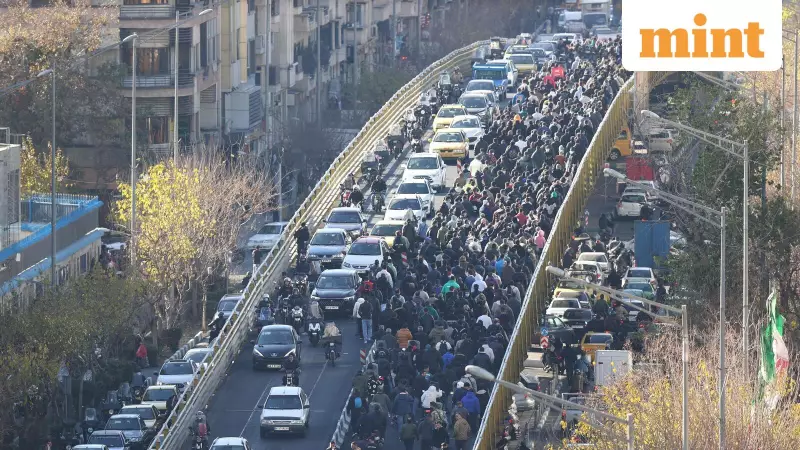
Widespread demonstrations fueled by a severe economic crisis have now reached the rural heartlands of Iran, resulting in the first reported fatalities among both security personnel and protesters. Authorities, quoted by various news agencies, confirm that at least seven people have been killed in the escalating unrest.
Fatal Clashes in Multiple Cities
The deaths, two occurring on Wednesday and five on Thursday, were reported across four cities, many within regions predominantly inhabited by Iran's Lur ethnic community, as per the Associated Press. The semi-official Fars news agency stated that on Thursday, at least three individuals were killed and 17 injured during protests in Azna, a city in Lorestan province located roughly 300 kilometers southwest of Tehran.
Earlier, Fars had reported two fatalities during protests in Lordegan, a city in the Chaharmahal and Bakhtiari province, about 470 kilometers south of the capital. The agency described scenes where some demonstrators threw stones at government buildings, including the provincial governor's office, a mosque, and banks.

Largest Demonstrations Since 2022
These protests mark the most significant wave of public dissent in Iran since the nationwide upheaval in 2022, which was triggered by the death of Mahsa Amini in police custody. However, the current demonstrations, while substantial, have not yet achieved the same nationwide scale or intensity as the 2022 movement, which centered on social freedoms.
The city of Azna appears to have witnessed the most intense violence. Online videos from the area showed streets on fire and the sound of gunfire, with people chanting "Shameless!" State-run media has not fully acknowledged the extent of the violence in Azna or elsewhere, a silence reminiscent of the 2022 crackdown when journalists faced arrests for their reporting.
In Lordegan, similar footage emerged showing demonstrators gathered on a street with audible gunshots in the background. The Washington-based Abdorrahman Boroumand Center for Human Rights identified two people killed there as protesters.
Economic Grievances and Official Response
The root cause of the unrest is squarely economic. "The protests that have occurred are due to economic pressures, inflation and currency fluctuations, and are an expression of livelihood concerns," said Said Pourali, the deputy governor of Lorestan province. He urged that citizens' voices be heard but warned against manipulation by "profit-seeking individuals."
The economic pain is acute. Iran's rial has plummeted in value, with one US dollar now fetching approximately 1.4 million rials. This currency crisis, combined with inflation running at around 40%, has devastated purchasing power. The protests began days earlier when shopkeepers initiated demonstrations over the government's handling of the economic slide.
Despite the government's attempts to signal a willingness to talk, President Masoud Pezeshkian has admitted there is little immediate relief he can offer. The unrest is further complicated by external pressures, including Western sanctions and recent air strikes by Israel and the United States in June 2025 targeting Iran's nuclear infrastructure.
The human cost continues to rise. State television reported the death of a 21-year-old member of the Basij volunteer force during protests in Kouhdasht. In Fuladshahr, Isfahan province, a man's death was attributed by activist groups to police gunfire. Authorities have responded with arrests, detaining at least 20 people in Kouhdasht and seven others labeled as monarchists or linked to foreign groups.






