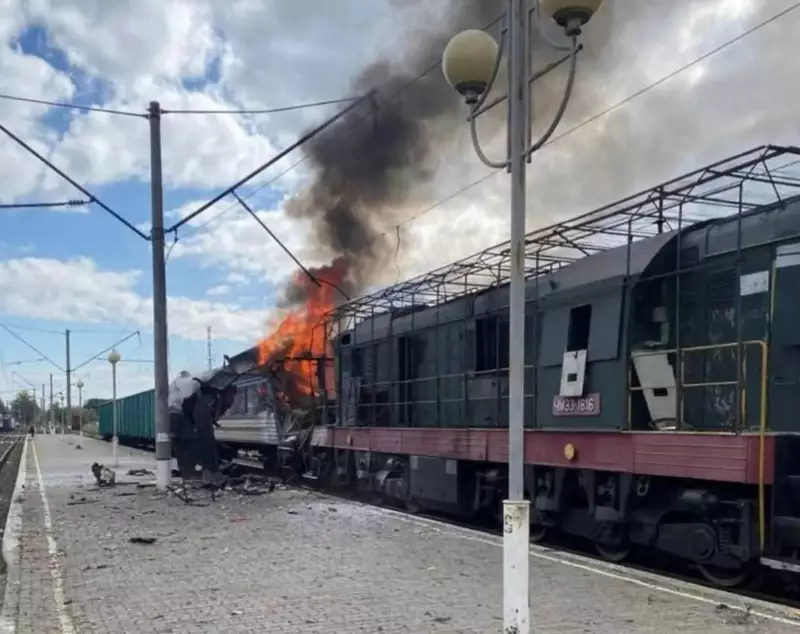
A deadly Russian missile attack on port infrastructure in the southern Ukrainian city of Odesa has left eight people dead and 27 others wounded, according to Ukraine's Emergency Service. The strike occurred late on Friday, marking another escalation in the long-running conflict.
Details of the Odesa Port Attack
Ukraine's Emergency Service provided details of the attack in a Telegram post on Saturday. The service stated that some of the wounded were on a bus located at the epicenter of the strike. The attack caused significant material damage, with trucks catching fire in a parking lot and several cars being damaged.
Oleh Kiper, the head of the Odesa region, confirmed that the port was struck with ballistic missiles. The Russian Defense Ministry, in a statement on Saturday morning, did not directly acknowledge the Odesa attack but said it had struck "transport and storage infrastructure used by the Ukrainian Armed Forces" over the previous day, along with energy facilities supporting Kyiv's war effort.

Ukraine's Retaliatory Drone Strikes
In a significant countermove, Ukraine's General Staff announced on Saturday that its drones had successfully targeted Russian assets. According to a statement posted on Telegram, a nighttime attack on Friday hit the Russian patrol ship "Okhotnik," which was patrolling in the Caspian Sea near an oil and gas production platform.
The extent of damage to the ship is still being assessed. The Ukrainian drones also struck a drilling platform at the Filanovsky oil and gas field in the Caspian Sea. This facility is operated by Lukoil, one of Russia's largest oil companies.
In a separate action, Ukrainian drones targeted a radar system in the Krasnosilske area of Crimea. Russia illegally annexed the Crimean peninsula from Ukraine in 2014. There has been no immediate comment from the Russian government or Lukoil regarding these attacks.
Strategic Implications and Sanctions
The strikes on Russian energy infrastructure carry strategic weight. Lukoil, alongside state-owned Gazprom, was recently targeted by U.S. sanctions designed to cut off Moscow's oil export revenue, which is crucial for funding its military operations.
Kyiv has used a similar rationale to justify months of long-range strikes on Russian oil infrastructure. Ukraine argues that these facilities both fund and directly fuel the Kremlin's full-scale invasion, which is soon to enter its fifth year. The mutual targeting of critical logistics and energy nodes underscores the war's evolving nature, where economic resilience is as vital as battlefield gains.