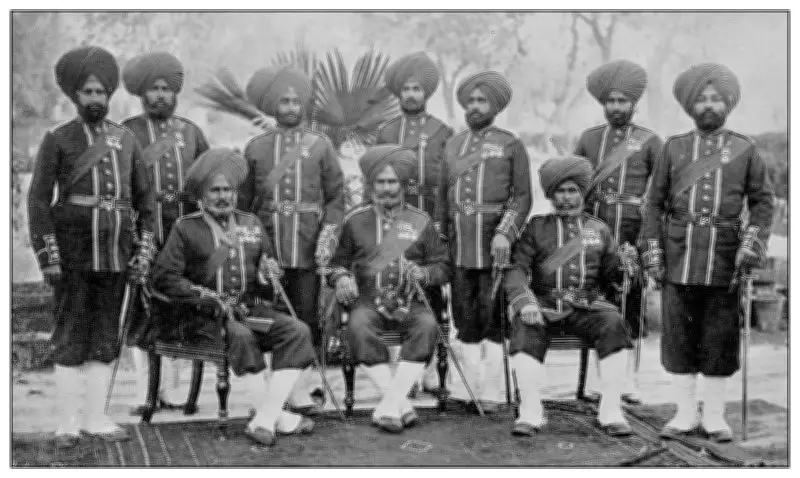
The Commonwealth War Graves Commission (CWGC) has added 9,909 soldiers from undivided Punjab to its casualty records for the First World War, correcting a historical omission that left these servicemen uncommemorated for over a century.
This addition is the largest single update to CWGC's casualty records since the Second World War. It results from the Punjab Registers project, a five-year collaboration between the CWGC, the UK Punjab Heritage Association (UKPHA), and the University of Greenwich.
Project details and historical records
The project digitized and analyzed a rare collection of documents held at the Lahore Museum, containing the names and service details of approximately 320,000 Punjabi recruits. Many of the newly recognized casualties were soldiers who died in non-operational zones within India during the war.

According to the CWGC statement, "The recovery of every one of these 9,909 names helps restore missing chapters in family and world histories." One in six soldiers fighting for the British came from pre-Partition India, with half a million from Punjab, including Sikh, Muslim, Hindu, and Christian servicemen.
Personal significance and family impact
Dr. Inder Singh Palahey, a dentist in Leicester, UK, spent years searching for information about his great-grandfather Kesar Singh, who went to war and never returned. He told the CWGC: "From just hearsay to now discovering the facts about my great-grandfather's ultimate military sacrifice, in particular the regiment he served in, has been incredibly poignant. Upon his death, he left a widow and two young children in poverty. So, the fact that he will now be remembered in perpetuity within global history ensures the whole family sacrifice is recognised: which simply means everything to us."
Historian's perspective on the correction
Amandeep Madra, British historian, author, and chair of the UK Punjab Heritage Association, stated: "Britain and Punjab share a long history, notably during the two World Wars, and for over a 100 years, part of it was missing. These men were never commemorated — not because they didn't serve, but because a decision made a century ago excluded their sacrifice from the record. Putting that right means giving families around the world their history back, and properly and equally commemorating the men who died."
He added: "This has only been possible because the Lahore Museum kept these fragile records safe for a hundred years, because the University of Greenwich and the Commonwealth War Graves Commission took that archive seriously, and because volunteers gave their time to recover, name by name, this previously lost history."
CWGC's commitment to commemoration
Claire Horton CBE, Director General of the CWGC, said: "Over a century after the end of the First World War, our mission endures, ensuring all those who died in the service of the Commonwealth receive the commemoration they deserve. The Punjab Registers project is a landmark moment in that mission."