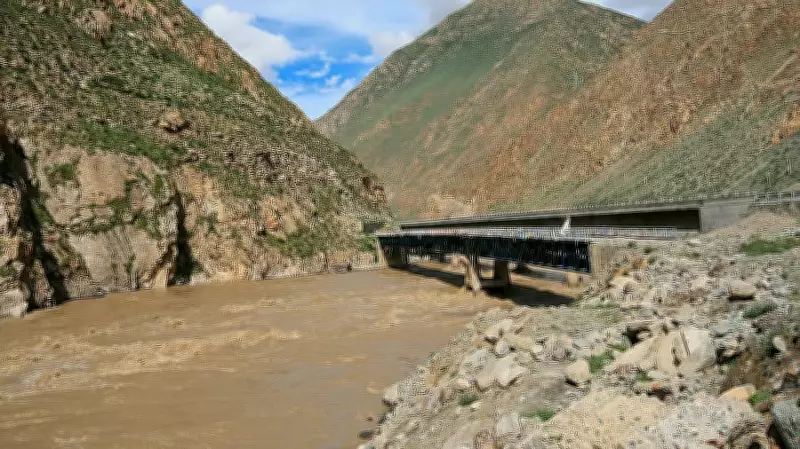
Chinese geologists have raised serious safety concerns about the Brahmaputra Mega-Dam being constructed in Tibet, warning that it is being built over an active seismic fault line. The scientists stated that a fracture in the Earth's crust in the eastern Himalayan region could significantly affect the structural integrity of the massive hydropower project's infrastructure, according to a report by the Hong Kong-based South China Morning Post on Thursday.
Geological Risks Highlighted
The dam, located on the Brahmaputra River (known as the Yarlung Tsangpo in Tibet), is one of the largest hydropower projects in the region. However, geologists have identified that the construction site lies directly above an active fault line, which could trigger severe structural damage during seismic events. The eastern Himalayan region is known for its high seismic activity, with frequent earthquakes posing a constant threat to infrastructure.
According to the South China Morning Post, the geologists emphasized that any significant earthquake could lead to catastrophic failure of the dam, potentially causing downstream flooding and displacement of communities in India and Bangladesh. The Brahmaputra River flows through these countries, and any dam breach would have transboundary impacts.

Project Details and Concerns
The Brahmaputra Mega-Dam is a key component of China's energy strategy, aimed at harnessing the river's hydropower potential. However, the project has been controversial due to its location in a seismically active zone. The geologists' warning adds to existing concerns from environmentalists and neighboring countries about the dam's safety and ecological impact.
“The presence of an active fault line beneath the dam site is a critical oversight,” a geologist involved in the study told the South China Morning Post. “Any major seismic event could compromise the dam's foundation, leading to irreversible damage.”
Impact on Downstream Nations
India and Bangladesh have repeatedly expressed concerns about Chinese dam projects on the Brahmaputra, citing potential risks to water security and disaster management. The geologists' findings could intensify diplomatic tensions, as downstream nations rely on the river for agriculture, drinking water, and livelihoods.
The report also noted that the dam's design may not adequately account for the region's seismic history. The eastern Himalayan fault line has produced several major earthquakes in the past, including a magnitude 8.6 event in 1950. Geologists argue that the dam's infrastructure must be reinforced to withstand such forces, but current plans may fall short.
Call for Further Studies
The geologists have called for comprehensive seismic risk assessments and independent reviews of the dam's construction. They urge Chinese authorities to consider alternative designs or relocation to safer ground. However, given the project's scale and investment, modifications may be challenging.
The Brahmaputra Mega-Dam is expected to generate significant electricity for China's grid, but the safety concerns highlight the delicate balance between energy needs and geological realities. As construction progresses, the international community will be watching closely for any signs of structural weakness.