

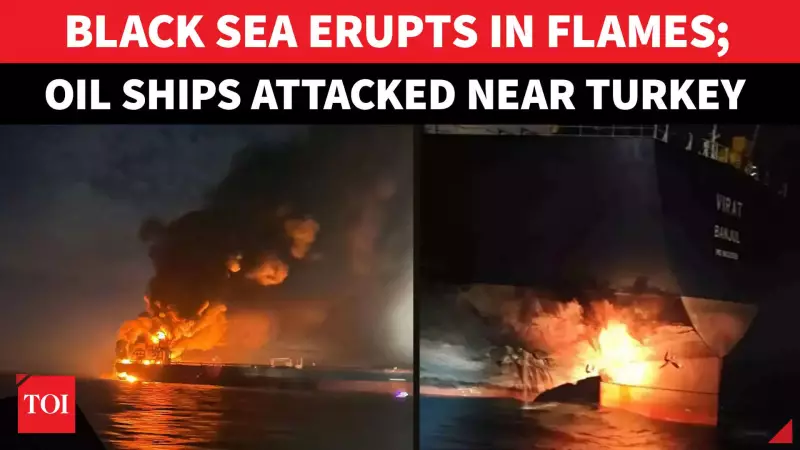
Dramatic drone attacks have shaken the Black Sea region near Turkey, targeting two Western-sanctioned oil tankers carrying Russian crude in back-to-back strikes that sent plumes of thick black smoke billowing into the sky.
Desperate Mayday Call As VIRAT Tanker Hit
The Gambian-flagged oil tanker VIRAT issued a panicked "Mayday, Mayday" distress call after what reports indicate was a drone boat collision with the vessel. This marked the second such attack within a tense 24-hour period in the strategically vital waters.
Meanwhile, the KAIROS tanker caught fire off the Turkish coast under circumstances authorities described as resulting from an "external cause" - strongly suggesting involvement of either a missile, drone, naval mine, or underwater vehicle in the assault.

Rescue Success Amid Escalation Fears
Despite the severity of both attacks, rescue teams managed to successfully save all crew members from the stricken vessels. However, the dramatic scenes of burning tankers and smoke-filled skies have raised serious concerns about escalating conflict along this crucial oil transportation corridor.
The back-to-back strikes occurring on November 29, 2025 represent a significant escalation in maritime tensions amid the ongoing Russia-Ukraine war. Both targeted vessels - VIRAT and KAIROS - were specifically carrying Russian crude oil, making them potential targets in the broader geopolitical conflict.
Vital Oil Corridor Under Threat
The Black Sea serves as a critical passage for global energy supplies, and these coordinated attacks on oil tankers have intensified fears about the security of this essential maritime route. The incidents come at a time when global energy markets remain particularly vulnerable to supply disruptions.
Maritime authorities are investigating the precise nature and origin of the attacks as the international community watches with growing concern. The targeting of oil tankers represents a dangerous new dimension in the conflict that could have far-reaching implications for global energy security and regional stability.






