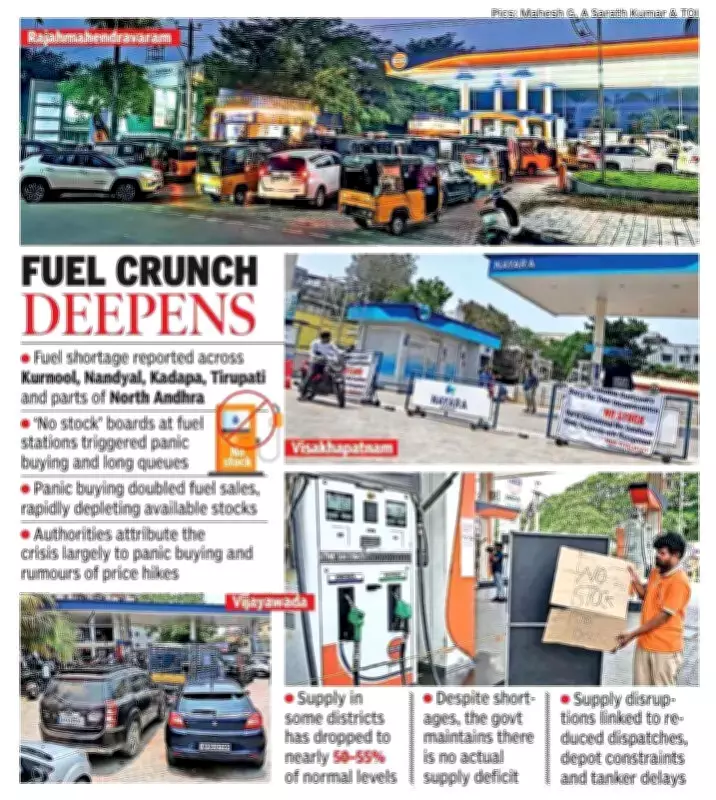
Amid the escalating Iran-US conflict deepening the global energy crisis, several fuel stations in Kurnool and Nandyal districts displayed 'no stock' boards, triggering a mad rush for fuel on Saturday. Despite repeated assurances from central and state governments and oil marketing companies (OMCs) about sufficient fuel stocks and refineries operating at full capacity, panic buying since Thursday left many petrol bunks dry in Kurnool district.
Fuel Station Status and Stock Details
Kurnool district has 166 fuel stations, including IOCL (51), BPCL (32), HPCL (62), and Nayara (21). Of these, 32 outlets ran out of fuel. District Collector Dr A. Siri stated that the average daily consumption of petrol is approximately 2.3 lakh litres, with about 7 lakh litres available at operating stations and 6 lakh litres in transit. Total petrol stocks stand at around 14 lakh litres, sufficient for a week. For diesel, average daily consumption is around 3.16 lakh litres, with 5.65 lakh litres at operating stations and 5.35 lakh litres in transit, enough for four days.
Panic Buying Blamed for Shortages
The collector attributed the dry pumps to panic buying, fueled by fear and anxiety. People rushed to stations with plastic cans and barrels to stockpile fuel. Sales at several stations doubled, leading to stock depletion. Rumors about possible supply disruptions and price hikes caused the rush. Officials assured that supplies are intact and appealed to the public to avoid panic buying.

Instances of manhandling of petrol station attendants were reported due to the frenzy. The collector urged people not to stock fuel at home, as it creates artificial shortages and harms those with genuine emergencies.
Disruptions and temporary closures were also reported in Nandyal, Kadapa, and Tirupati districts. 'No stock' boards added to chaos. Dealers cited slow replenishment from depots due to panic-driven high-speed sales. Some dealers noted that oil companies now insist on advance payments, contributing to dry pumps.
Authorities continue to monitor the situation and assure adequate fuel availability across the region.