A hand-drawn map, passed from father to son and kept for decades, eventually led to the recovery of a family treasure hidden during one of Europe's most turbulent periods. What began as a story told across generations became a real-life search stretching over many years, ending with the discovery of valuables that had remained buried since the outbreak of the Second World War.
According to The Sun, Jan Glazewski spent years pursuing a promise he had made to his late father. The search centred on a family estate in what was then eastern Poland, a region whose borders and political control changed dramatically during and after the war.
How a family treasure was hidden during World War II
The treasure's story began in September 1939 as war spread across Europe. Faced with the advance of Soviet forces, members of the Glazewski family gathered valuable possessions and concealed them before fleeing their home. The intention was simple: protect what they could and return when circumstances allowed.

That return never happened. The family's patriarch, Adam Glazewski, remained behind while the rest of the household escaped. The property was eventually lost, and the family's future was scattered across different countries. His sons built new lives far from the estate, carrying only memories of what had been left behind. Over time, stories of hidden silver, jewellery and other belongings became part of the family's history. Yet nobody knew whether the items still existed or had long since been discovered by others.
The hand-drawn map that led to a lost family treasure
Years later, Jan's father, Gustaw, attempted to record the location of the hidden cache. According to The Sun, he sketched a rough map in 1989, relying entirely on memories from half a century earlier.
The drawing was far from precise. Buildings had vanished, landscapes had changed, and vegetation had transformed the terrain. Even so, Gustaw included directions and notes that he hoped would guide a future search.
For Jan, the map carried more than geographical information. It represented a request from his father and a connection to relatives he had never truly known. Gustaw died in 1991, leaving the map behind.
Political change eventually made the search possible. Following Ukraine's independence, Jan was able to visit the former family estate, though turning an old sketch into an actual location proved difficult.
The search for an 80-year-old buried family treasure
The challenge was not simply finding a buried object. The entire setting had altered beyond recognition.
According to The Sun, the manor house once standing on the estate had been destroyed decades earlier. Fields had become overgrown, pathways had disappeared, and woodland had expanded across parts of the property.
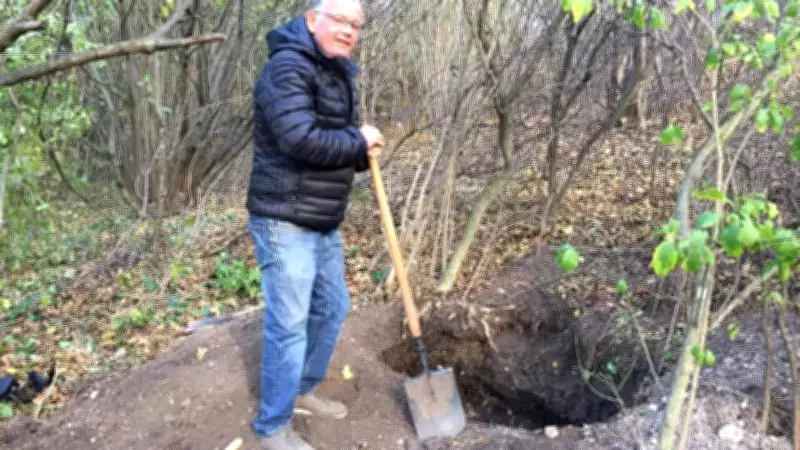
Jan began seriously pursuing the treasure hunt in 2019. Assisted by family members and local metal-detection experts, he worked through the clues left behind by his father. There was no guarantee anything remained underground. The possibility that workers, residents or passers-by had discovered the valuables years earlier seemed entirely plausible. Yet the team continued.
Eventually, after narrowing down the most likely location, a metal detector signalled beneath the soil.
Jewellery, silver and family heirlooms unearthed after 80 years
What emerged was more than a collection of valuables. According to The Sun, among the recovered items were pieces of jewellery, family silver and personal possessions linked directly to earlier generations of the Glazewski family. Some objects carried names, initials and engravings that confirmed their origins.
One discovery held particular significance. Jan realised that certain items had likely been packed by his mother before the family fled. She died when he was still a child, meaning he was handling possessions she had last touched more than eight decades earlier. The recovery also included hunting guns and other family heirlooms that had survived underground through war, political upheaval and changing borders.
While the collection has been valued at thousands of pounds, its importance extends well beyond money. For Jan, the find represented the fulfilment of a long-held family wish and the completion of a task entrusted to him by his father many years ago.

The story is especially remarkable because Jan himself faced serious health challenges during his life. According to The Sun, he survived an HIV infection caused by contaminated blood products received during haemophilia treatment. Years later, he was still able to complete the search that had occupied his thoughts for decades. The recovered treasure now stands as a physical link between generations separated by war, migration and loss. After remaining hidden beneath the ground for more than 80 years, the family history buried alongside it has finally resurfaced.