

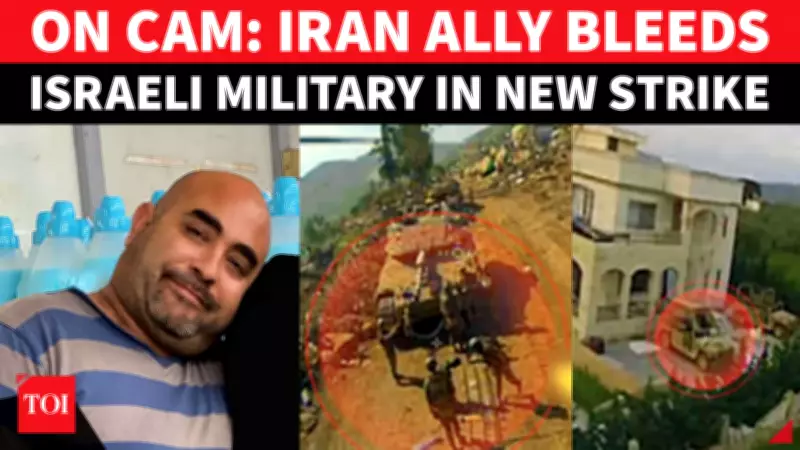
A civilian contractor working for the Israeli Defense Ministry was killed in a drone strike in southern Lebanon, marking a significant escalation in the ongoing Israel-Lebanon conflict. The attack, carried out by Iran-backed Hezbollah, targeted an Israeli military bulldozer near the village of Aitaroun, close to Bint Jbeil.
Details of the Attack
The victim, identified as 44-year-old Amer Hujirat, was a civilian contractor employed by the Israeli Defense Ministry. He was killed instantly when a Hezbollah drone struck the bulldozer he was operating. His 19-year-old son, who was working alongside him, sustained injuries in the blast and is currently receiving medical treatment in Safed. The bulldozer was engaged in operations aimed at dismantling Hezbollah infrastructure in the border area.
This incident underscores the growing reach and precision of Hezbollah's drone capabilities. The group has increasingly relied on unmanned aerial vehicles to target Israeli military assets, posing a new challenge to Israeli defense systems. The drone strike also highlights the dangers faced by civilian contractors operating in active conflict zones, despite not being recognized as fallen soldiers under Israeli military protocols.

Broader Implications
The attack comes amid heightened tensions along the Israel-Lebanon border. Hezbollah, which is backed by Iran, has been intensifying its drone operations in recent months, targeting Israeli positions and infrastructure. The Israeli military has responded with airstrikes and artillery fire, but the use of drones by Hezbollah has complicated the battlefield dynamics.
Civilian contractors like Hujirat play a crucial role in supporting military operations, yet their deaths in conflict zones often go unrecognized in official casualty counts. This has sparked debate about the legal and ethical status of such workers in active war zones. The incident also raises questions about the effectiveness of Israeli counter-drone measures and the potential for further escalation.
Regional Reactions
Hezbollah has claimed responsibility for the attack, stating that it was a response to Israeli aggression in southern Lebanon. The Israeli government has condemned the strike, vowing to retaliate. Meanwhile, international observers have called for restraint to prevent a full-scale war. The United Nations Interim Force in Lebanon (UNIFIL) has urged both sides to adhere to ceasefire agreements.
The attack is likely to strain already fragile relations between Israel and Lebanon. It also adds to the growing list of incidents involving drone warfare in the Middle East, where non-state actors have increasingly adopted this technology to challenge conventional military forces.






