

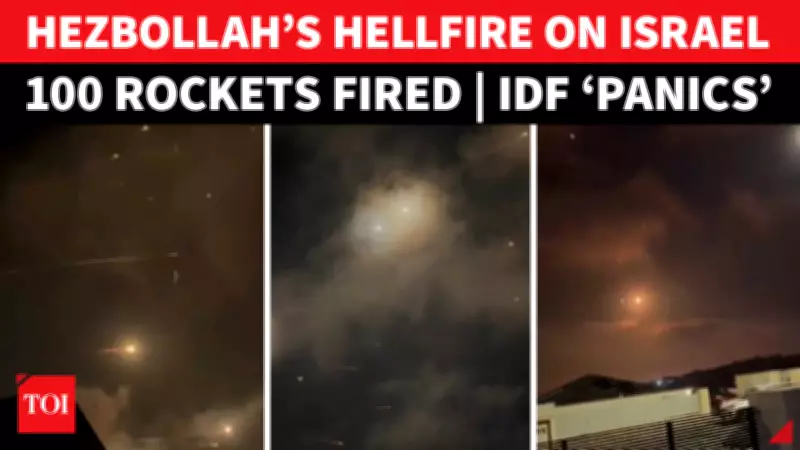
Hezbollah Unleashes Massive Rocket Barrage on Northern Israel
In a dramatic escalation of hostilities, the Lebanese militant group Hezbollah fired approximately 100 rockets from Lebanese territory toward northern Israel in the early hours of March 12, 2026. This barrage represents the largest single rocket offensive by Hezbollah since the broader conflict intensified earlier this month, marking a significant uptick in violence along the Lebanese-Israeli border.
Widespread Alerts and Immediate Israeli Response
The rocket attack triggered air raid sirens across multiple regions in northern Israel, including the major port city of Haifa, the Galilee area, and the Golan Heights. Residents were urged to seek shelter as the skies lit up with incoming projectiles. The Israel Defense Forces (IDF) confirmed that this was the most substantial Hezbollah rocket assault since the recent escalation began, highlighting the severity of the threat.
Israel's response was swift and simultaneous. As the rockets were launched, the IDF activated its air defense systems to intercept incoming threats while simultaneously conducting precision strikes on Hezbollah's identified launch positions across Lebanon. The speed and coordination of these retaliatory strikes suggest that Israeli forces had pre-mapped the firing locations in advance, allowing for an almost instantaneous counterattack.

Intensity and Historical Context
This incident stands out as the most intense single night of fire on the Lebanese front since February 28, underscoring the volatile nature of the current conflict. The use of such a large number of rockets in one barrage indicates Hezbollah's capability to coordinate complex attacks and its willingness to escalate tensions significantly. The IDF's ability to respond in real-time demonstrates Israel's advanced military preparedness and intelligence-gathering efforts in the region.
The broader implications of this exchange are profound, as it risks drawing other actors into the conflict and further destabilizing an already tense Middle East. Both sides have vowed to continue their operations, with Hezbollah likely viewing the barrage as a show of strength and Israel emphasizing its right to defend its territory against any threats.
This development comes amid a series of regional escalations, including other reported incidents involving Iranian proxies and international forces. However, the Hezbollah rocket attack and IDF retaliation highlight the direct and immediate dangers faced by civilians in northern Israel and southern Lebanon, where cross-border violence has become increasingly frequent.






