

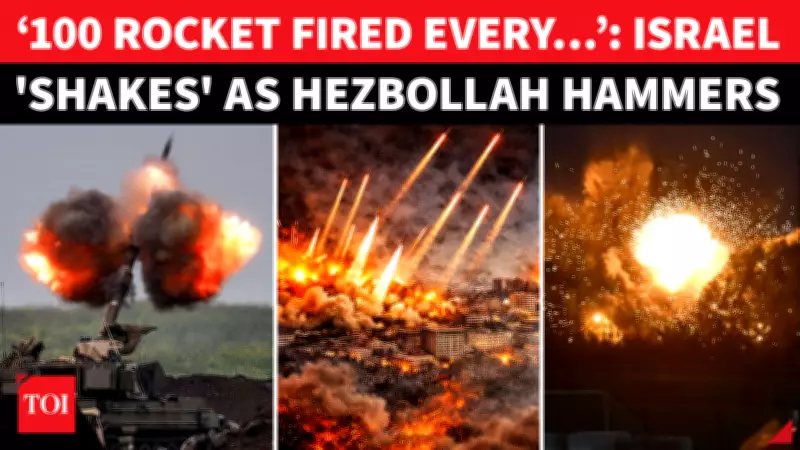
Hezbollah Intensifies Strikes: 100 Rockets Daily as Israel Faces Escalating Conflict
Hezbollah has launched a massive and sustained wave of attacks against Israel, dramatically escalating hostilities in the region. The militant group claimed responsibility for 54 separate strikes in a single day, targeting Israeli military sites, troop positions, and border areas with a relentless barrage of rockets, drones, and artillery fire.
Unrelenting Barrage and Sirens Across Northern Israel
Sirens continue to sound incessantly across northern Israel as the rocket fire has intensified to an alarming average of one rocket every 16 minutes. This constant threat has placed communities on high alert, with residents facing daily disruptions and seeking shelter from the incoming projectiles. The frequency and scale of these attacks represent a significant escalation in Hezbollah's operational tempo.
Israeli Media Warns of Prolonged War of Attrition
Israeli media outlets are now issuing stark warnings about the potential for a prolonged war of attrition. Reports indicate that Hezbollah has been sustaining a rate of nearly 100 rockets fired daily, demonstrating both the group's substantial arsenal and its commitment to maintaining pressure on Israeli defenses. This sustained bombardment suggests a strategic shift toward exhausting Israeli resources over time.

Destruction of Key Infrastructure and Evolving Tactics
The conflict has seen the destruction of key radar infrastructure, which compromises Israel's early warning and defense capabilities. Additionally, Hezbollah has been shifting its launch tactics, employing more sophisticated methods to evade interception and maximize impact. These developments point to a carefully calculated long-term strategy rather than sporadic engagements.
Fears of Wider and More Intense Regional Conflict
The escalating situation has raised serious concerns among analysts and officials about the potential for a wider and more intense regional conflict. The sustained nature of Hezbollah's attacks, combined with the destruction of critical military infrastructure, creates a volatile environment where miscalculation could lead to broader hostilities involving other actors in the Middle East.
The current phase of conflict represents a dangerous escalation in the long-standing tensions between Hezbollah and Israel, with both sides demonstrating increased capabilities and resolve. The international community is closely monitoring developments as the risk of regional spillover grows with each passing day of sustained rocket fire and military engagements.






