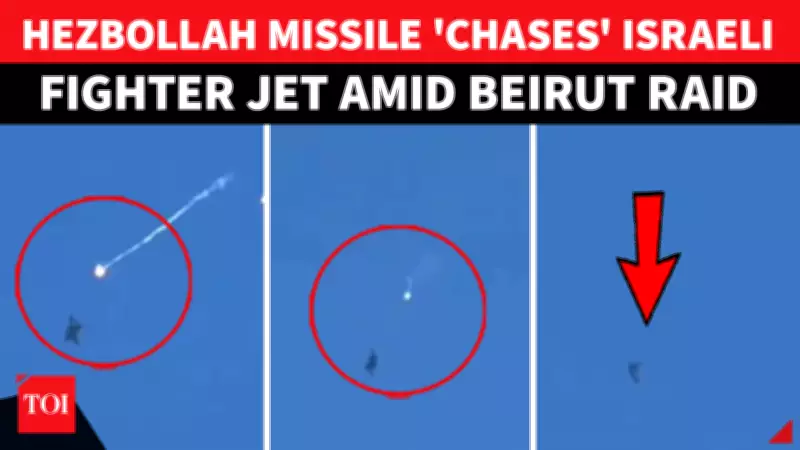
The skies over southern Lebanon witnessed a fresh escalation on Sunday as Iran-backed Hezbollah claimed it launched a surface-to-air missile at an Israeli fighter jet flying over the Nabatiyeh region. According to Iranian media, the missile targeted an Israeli warplane during ongoing hostilities between Hezbollah and Israel.
Footage circulating on social media appeared to show the missile tracking the aircraft, while the jet reportedly deployed defensive flares and maneuvered to evade the strike. The authenticity of the footage and the claims have not been independently verified.
The incident came hours after Israel carried out airstrikes on Beirut's southern suburbs, killing at least two people and wounding several others, according to Lebanese authorities. Israel said the strikes targeted Hezbollah command centers in response to attacks on northern Israel.

Escalation in Hostilities
This mid-air chase marks a significant escalation in the conflict between Hezbollah and Israel. The use of surface-to-air missiles against Israeli aircraft is relatively rare, as Hezbollah typically relies on rocket and drone attacks. The incident underscores the growing sophistication of Hezbollah's military capabilities, which are backed by Iran.
Regional Implications
The airstrikes on Beirut and the missile launch have heightened tensions across the region. Lebanese authorities condemned the Israeli strikes, while Hezbollah vowed retaliation. Meanwhile, the United Nations Interim Force in Lebanon (UNIFIL) called for restraint from both sides to prevent a wider war.
The international community, including the United States and European Union, has urged de-escalation. However, with both sides showing no signs of backing down, the situation remains volatile. Analysts warn that further clashes could destabilize the already fragile region.