

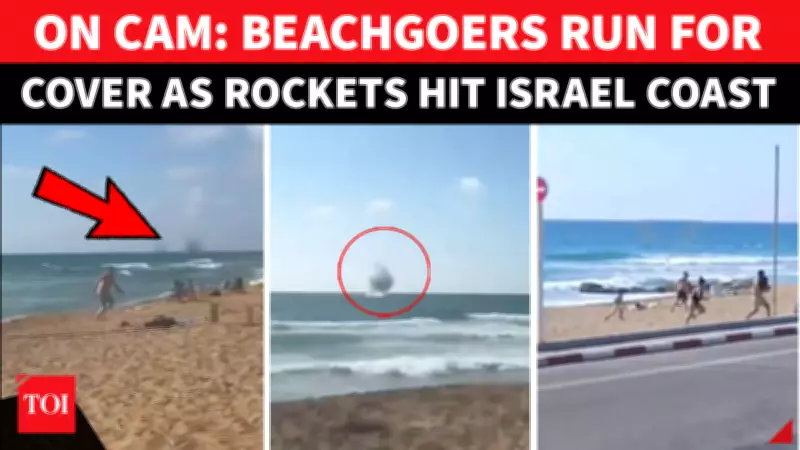
Tensions along Israel's northern front have escalated sharply after a new wave of Hezbollah rocket fire struck areas near the coastline, sending civilians fleeing for safety. According to reports and footage shared by Army Radio and circulating on social media via RT-linked visuals, rockets landed in or near the waters off Nahariya, triggering panic among beachgoers who were seen running away as explosions echoed along the shore. The attacks reportedly extended beyond Nahariya, with Karmiel also targeted in what is being described as one of the farthest-reaching strikes since the recent ceasefire period.
Beachgoers Caught Off Guard
Videos captured the chaotic scenes as families and individuals scrambled to escape the shoreline. The explosions sent plumes of smoke and water into the air, causing widespread alarm. Witnesses reported hearing multiple blasts before the rockets struck the water near popular swimming spots. Emergency services quickly arrived at the scene to assist those affected and ensure the area was evacuated.
Hezbollah's Escalating Tactics
This latest attack marks a significant escalation in Hezbollah's capabilities, as the rockets reached deeper into Israeli territory than in recent weeks. Military analysts suggest that the group may be testing Israel's air defense systems and probing for weaknesses along the northern border. The strike on Karmiel, a city further inland, indicates a potential shift in strategy aimed at targeting civilian populations.

Official Response
The Israel Defense Forces (IDF) confirmed that multiple rocket launches were detected from southern Lebanon. In response, IDF artillery and aircraft struck Hezbollah positions in the area. No immediate casualties were reported, but the psychological impact on residents has been profound. Local authorities have urged civilians to remain vigilant and follow safety protocols.
Broader Regional Implications
The incident comes amid heightened tensions across the region, with ongoing conflicts involving Iran and its proxies. Hezbollah's actions are seen as part of a broader pattern of aggression that threatens to destabilize the fragile ceasefire. International observers have called for restraint, but the situation remains volatile. This attack underscores the persistent threat posed by Hezbollah's rocket arsenal and the challenges facing Israel's defense strategy.






