

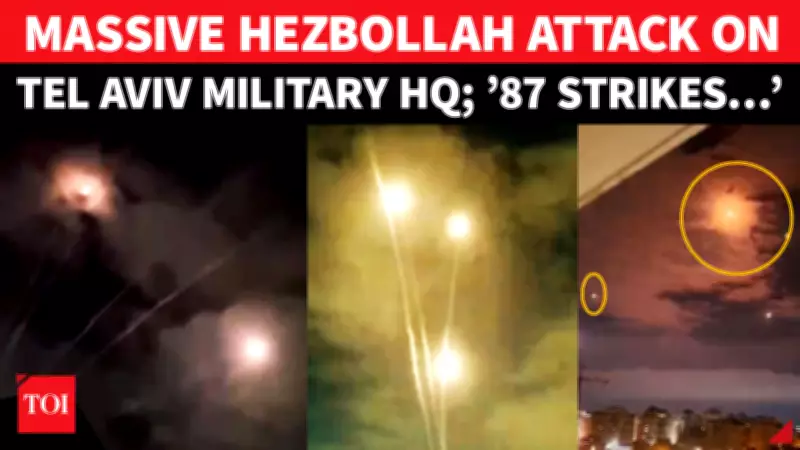
Hezbollah Claims Major Missile Barrage on Israeli Military Targets in Tel Aviv
In a significant escalation of hostilities, the Lebanese militant group Hezbollah has asserted responsibility for a coordinated series of missile strikes targeting Israeli military installations deep within Israel, including the critical Kirya Defense Ministry headquarters in Tel Aviv. The group announced a total of 87 separate operations conducted within a single day, marking one of the most intense confrontations in recent months.
Targets and Claims of the Attack
According to Hezbollah's statements, the strikes focused on high-value military sites in central Israel. The primary targets included the Kirya complex, which houses Israel's Defense Ministry and serves as a key command center, and the Dolphin barracks, facilities reportedly linked to intelligence operations. Additionally, Hezbollah claimed a direct hit on a Merkava tank, part of a broader assertion of damaging 21 such armored vehicles during the operations. These battlefield claims, however, remain unverified by independent sources amid the chaotic and rapidly evolving situation.
Israeli Response and Casualties
Israeli authorities confirmed that multiple rockets were launched from Lebanon, with defense systems intercepting all projectiles mid-air. Emergency response teams were deployed across central Israel to assess and manage the fallout. The Israel Defense Forces (IDF) reported that one soldier sustained injuries during the attacks. In retaliation, Israel conducted strikes on what it identified as launch sites in Lebanon, aiming to neutralize further threats. The exchange of fire underscores the heightened tensions in the region, with both sides on high alert.

Context and Regional Implications
This incident occurs against a backdrop of escalating conflict in the Middle East, where proxy wars and direct confrontations have become increasingly frequent. The targeting of Tel Aviv, Israel's economic and cultural hub, represents a bold move by Hezbollah, signaling a potential shift in tactics. Analysts warn that such deep strikes could provoke a more severe Israeli response, risking a broader regional war. The unverified nature of some claims adds to the uncertainty, with misinformation often clouding battlefield assessments in such volatile environments.
International Reactions and Future Outlook
While specific international responses to this latest flare-up are still emerging, global powers have historically urged restraint from both sides to prevent a full-scale war. The involvement of other actors, such as Iran, which supports Hezbollah, further complicates the geopolitical landscape. Observers note that continued strikes and counter-strikes could destabilize not only Israel and Lebanon but also impact neighboring countries and international trade routes. The situation remains fluid, with military and diplomatic channels actively engaged to de-escalate tensions.
In summary, Hezbollah's claimed 87 strikes, including on Tel Aviv's military headquarters, highlight a dangerous escalation in the Israel-Lebanon conflict. With Israel confirming interceptions and retaliatory actions, and casualties reported, the region braces for potential further hostilities as both sides assess their next moves in this high-stakes confrontation.






