

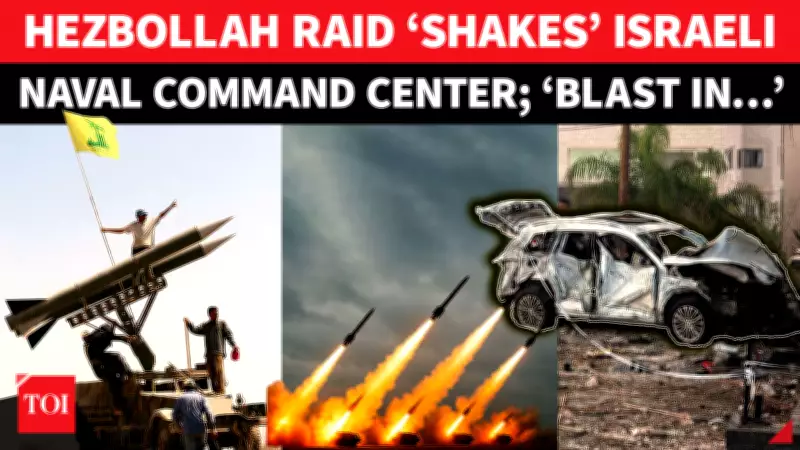
Hezbollah Unleashes 30-Rocket Assault on Israel's Strategic Haifa Naval Hub
In a bold daylight offensive, the Iran-backed militant group Hezbollah launched approximately thirty rockets from southern Lebanon toward Israel's critical Haifa Bay area. The sudden barrage sent air raid sirens wailing across the region, forcing civilians to scramble for shelter as projectiles streaked across the sky.
Air Defenses Activated as Rockets Target Key Infrastructure
Israeli air defense systems sprang into action, successfully intercepting the majority of incoming rockets before they could reach their targets. Preliminary reports indicate no injuries or significant damage resulted from the attack, though the psychological impact on Haifa's residents was immediate and profound.
This coordinated assault represents more than just another border skirmish—it demonstrates a calculated strategy of pressure being executed by Iran-aligned forces across the Middle East. By keeping Israel's military constantly alert and forcing the deployment of defensive resources, these proxy groups aim to stretch Israeli capabilities thin and create strategic advantages through disruption rather than direct confrontation.

The Evolving Nature of Modern Proxy Warfare
The Haifa attack exemplifies the changing character of regional conflicts, where destruction takes a backseat to distraction and strategic positioning. Iran-backed militias are increasingly employing tactics designed to divide attention, drain resources, and create persistent uncertainty rather than seeking decisive battlefield victories.
This approach keeps Israeli defense forces in a perpetual state of readiness, requiring constant vigilance across multiple fronts simultaneously. The psychological warfare component cannot be underestimated, as civilian populations must repeatedly seek shelter and normal life is regularly interrupted by sirens and threats.
Regional Implications and Strategic Calculations
The timing and location of the Haifa strike carry particular significance. As one of Israel's most important naval bases and industrial centers, Haifa represents both economic and military critical infrastructure. Targeting such a high-value location sends a clear message about Hezbollah's reach and capabilities.
Military analysts note that these back-to-back attacks follow a pattern of increasing coordination among various Iran-aligned groups operating across Lebanon, Syria, Iraq, and Yemen. This networked approach to pressure creates multiple simultaneous challenges for Israeli defense planners, who must allocate resources across geographically dispersed threats while maintaining domestic security.
The absence of casualties in this particular incident suggests a calibrated approach—demonstrating capability without necessarily seeking maximum destruction. This nuanced strategy allows Iran's proxies to maintain pressure while potentially avoiding the type of massive retaliation that could escalate into broader regional conflict.
As tensions continue to simmer across the Middle East, incidents like the Haifa rocket barrage highlight how modern warfare increasingly operates in the gray zone between peace and all-out conflict, where psychological impact and strategic positioning often outweigh immediate tactical gains.






