

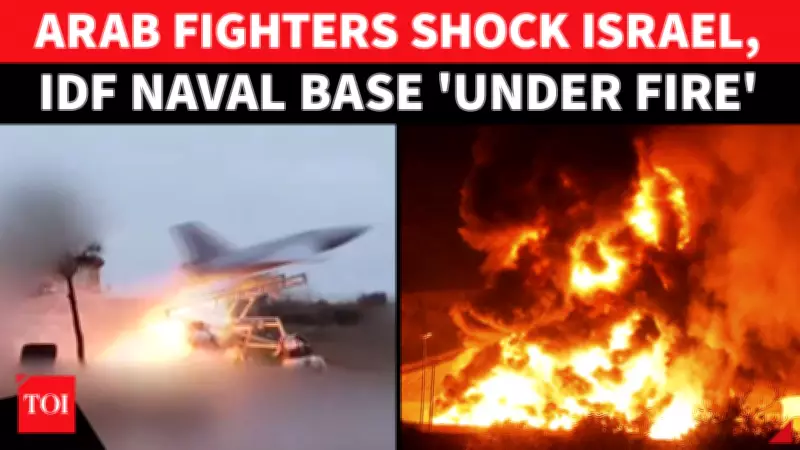
Hezbollah Escalates Conflict with Boldest Attacks Yet on Israeli Territory
In a significant escalation of hostilities, Hezbollah fighters launched coordinated missile strikes targeting strategic Israeli installations, marking what analysts are calling the group's "boldest attack" to date. The attacks represent a dangerous new phase in the ongoing conflict between Israel and the Iran-backed militant group.
Strategic Naval Base Targeted in Haifa Region
The Stella Maris naval base, located northwest of Haifa, came under direct fire from Hezbollah missiles. This critical Israeli installation serves as a key facility for naval monitoring and control operations along Israel's northern coastline. The strike on this strategic asset demonstrates Hezbollah's growing capability to target sensitive military infrastructure.
Deep Penetration Strikes Reach Central Israel
In a separate and more alarming development, Hezbollah claimed responsibility for attacks that penetrated deeper into Israeli territory than any previous strikes since hostilities intensified. The group targeted the IDF Home Front Command headquarters in Ramle and a satellite communications station in the Haela Valley near Beit Shemesh.

These strikes represent a significant escalation, as Ramle and Beit Shemesh are located considerably further south than previous Hezbollah targets, indicating either improved missile capabilities or a willingness to take greater risks in the conflict.
Israel's Military Response and Displacement Orders
In response to these attacks, Israel has taken decisive military action. Israeli ground forces have pushed further into southern Lebanon, expanding their operational footprint in the border region. Additionally, Israeli authorities have issued forced displacement orders covering 59 areas including the Dahiyeh neighborhoods, signaling preparations for intensified military operations.
Regional Context and Escalating Tensions
These developments occur against a backdrop of increasing regional tensions involving Iran and its proxies. The strikes on Israeli territory follow a pattern of escalating attacks throughout West Asia, with multiple incidents targeting military installations across the region in recent days.
Military analysts warn that hostilities are expected to increase further in the coming days, with both sides demonstrating willingness to escalate their military responses. The targeting of command centers and communications infrastructure suggests both sides are preparing for a potentially prolonged conflict.
Strategic Implications and Future Outlook
The ability of Hezbollah to strike targets deep within Israeli territory represents a significant shift in the conflict dynamics. Previously, most exchanges were limited to border areas, but these latest attacks demonstrate Hezbollah's capacity to threaten more central locations.
Israel's response, including ground advances into Lebanon and expanded displacement orders, indicates a determination to respond forcefully to these provocations. The situation remains fluid, with both sides appearing to prepare for further escalation in what has become one of the most dangerous phases of the Israel-Lebanon conflict in recent years.






