

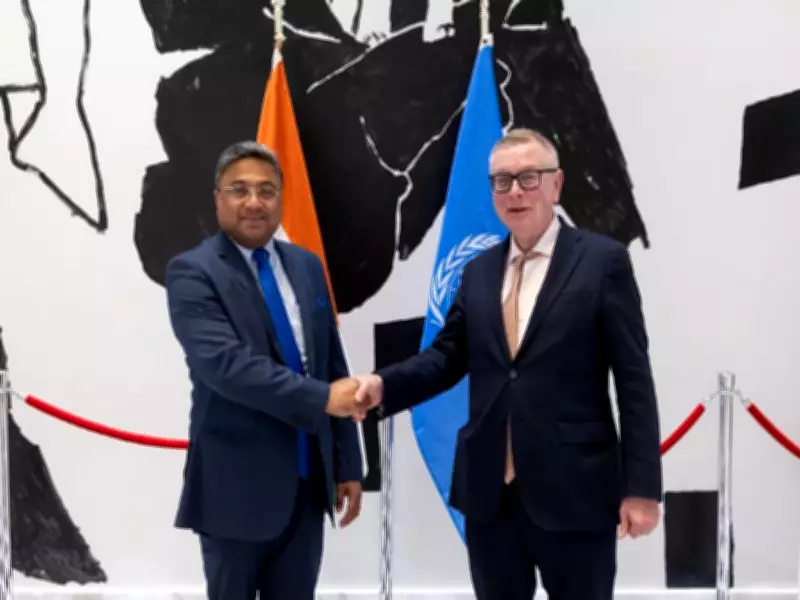
India's Ministry of External Affairs (MEA) Secretary for West, Pavan Kapoor, met with the acting under-secretary-general of the United Nations Office of Counter-Terrorism (UNOCT), Raffi Gregorian, in New Delhi on Tuesday. The meeting focused on the growing menace of terrorism and the need for a coordinated global response.
Key Discussions on Counter-Terrorism
During the talks, both sides exchanged views on the current global terrorism landscape, including the rise of new terrorist groups and the use of advanced technologies by extremists. Secretary Kapoor emphasized India's zero-tolerance approach to terrorism and called for stronger international cooperation to dismantle terror networks.
The UN official acknowledged India's significant role in counter-terrorism efforts and appreciated its contributions to UN peacekeeping missions. Gregorian also highlighted the importance of preventing the spread of terrorist ideologies through education and community engagement.

India's Stance on Cross-Border Terrorism
India reiterated its concerns about cross-border terrorism originating from its neighborhood, specifically mentioning the need to address safe havens and sanctuaries for terrorist groups. The MEA secretary stressed that any comprehensive counter-terrorism strategy must include measures to hold state sponsors of terrorism accountable.
The meeting also touched upon the need for better intelligence sharing and capacity building among nations to counter the evolving threat. Both sides agreed to continue their dialogue and work together within the UN framework to strengthen global counter-terrorism architecture.
Way Forward
The discussions are part of India's ongoing engagement with the UN to enhance cooperation in combating terrorism. India has been a strong advocate for the adoption of the Comprehensive Convention on International Terrorism (CCIT) at the UN, which seeks to criminalize all forms of terrorism and deny safe havens to terrorists.
The meeting concluded with a commitment to further collaboration on counter-terrorism initiatives, including joint training programs and technical assistance for member states.






