

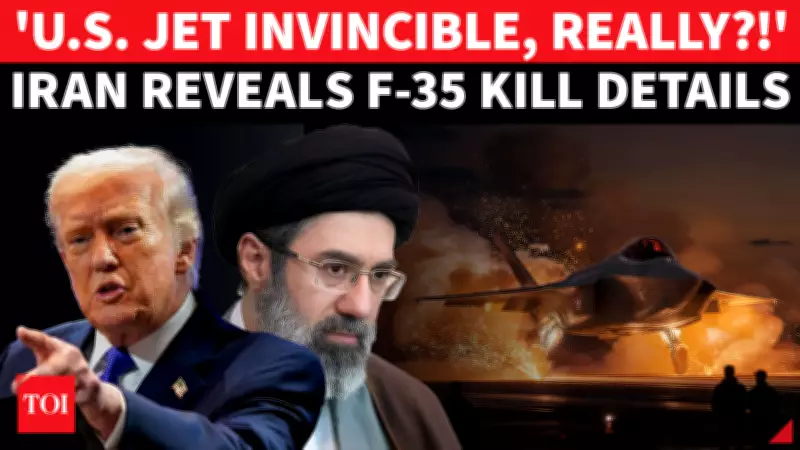
Iranian Military Claims Historic Engagement Against U.S. F-35 Stealth Fighter
In a televised statement that has sent shockwaves through international defense circles, senior Iranian air defense officials have made the bold assertion that their systems successfully engaged and hit a United States F-35 Lightning II stealth fighter jet. This claim directly challenges long-held assumptions about the invulnerability of fifth-generation stealth aircraft in modern aerial combat scenarios.
The Televised Revelation from Tehran
During a carefully orchestrated broadcast, Iranian military officers presented what they described as evidence of this unprecedented engagement. The officials framed the event as a pivotal moment where the "myth of stealth invincibility" was decisively shattered by Iranian defense capabilities. The narrative emerging from Tehran emphasizes their military's 24/7 operational readiness and the deployment of specialized systems designed to counter advanced threats, including sophisticated anti-cruise missile technology.
The Iranian military's claims represent a significant escalation in psychological warfare and propaganda efforts, aimed at projecting strength and technological parity with global superpowers. While independent verification of the engagement remains unavailable, the announcement has sparked intense debate among defense analysts regarding the evolving nature of air defense systems and their ability to detect and track low-observable aircraft.

Technical and Strategic Implications
The F-35 Lightning II, developed by Lockheed Martin, represents the pinnacle of U.S. military aviation technology, with advanced stealth characteristics designed to evade detection by enemy radar systems. Iran's claim of successful engagement suggests potential vulnerabilities or the development of counter-stealth technologies that could reshape future combat dynamics.
Military experts are closely examining several critical aspects of Iran's claims:
- The specific air defense systems reportedly involved in the engagement
- The geographical location and circumstances of the alleged incident
- Technical data supporting the identification of the aircraft as an F-35
- The nature and extent of any damage inflicted on the stealth fighter
Iran has been steadily developing and showcasing indigenous air defense systems in recent years, including the Bavar-373 and Khordad-15 systems, which they claim possess advanced capabilities against aerial targets. This latest announcement appears to be part of a broader strategy to demonstrate military self-sufficiency and deter potential adversaries through public displays of defensive prowess.
Regional and Global Context
The timing of this revelation coincides with heightened tensions in the Middle East, where multiple flashpoints continue to simmer. The claim comes against a backdrop of:
- Ongoing diplomatic challenges between Iran and Western powers
- Increased military posturing by various regional actors
- Advancements in missile and drone technologies across the Middle East
- Strategic competition for air superiority in contested zones
While U.S. officials have not publicly commented on the specific Iranian claims, the Pentagon has consistently maintained that the F-35's stealth capabilities remain unmatched and that the aircraft continues to perform effectively in various operational theaters. The conflicting narratives highlight the complex information warfare dimension of modern conflicts, where claims of technological breakthroughs can carry significant strategic weight regardless of verifiable evidence.
The Iranian announcement has undoubtedly injected new complexity into regional security calculations, potentially influencing defense procurement decisions, tactical planning, and diplomatic negotiations across the Middle East and beyond.






