

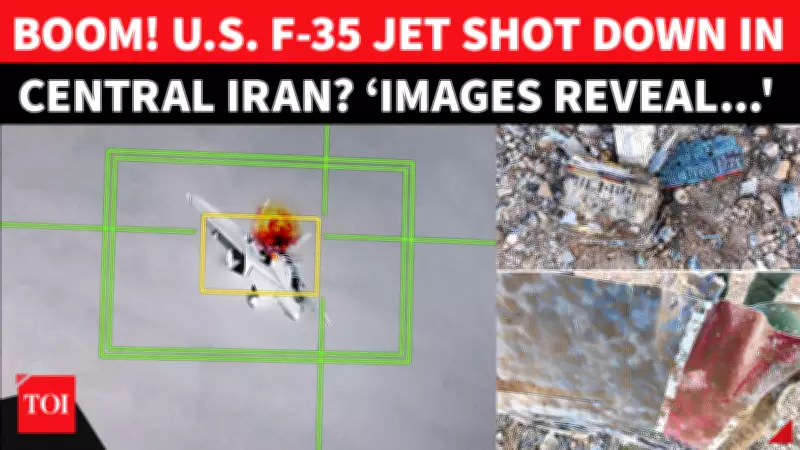
Iran Alleges Second U.S. F-35 Stealth Fighter Shot Down, Releases Unverified Evidence
In a dramatic escalation of Middle East tensions, Iran has claimed it shot down a second U.S. F-35 stealth fighter jet over its territory. Iranian state media, including Press TV and Mehr News Agency, published photographs purportedly showing the crash site of the advanced aircraft in central Iran. The authenticity of these images remains unconfirmed by independent sources.
Military Claims and Unverified Details
The Islamic Revolutionary Guard Corps (IRGC) stated that its air-defense systems successfully targeted and struck the F-35. According to their report, the pilot is unlikely to have survived the incident. This claim follows a pattern of heightened military assertions from Iran amid ongoing regional conflicts.
The United States Central Command has not officially confirmed or denied the incident at this time. The lack of immediate verification leaves the situation shrouded in uncertainty, with analysts cautioning against premature conclusions.

Potential Strategic Implications
If Iran's allegations prove accurate, the loss of an F-35 would represent a significant strategic setback for U.S. air operations in the Middle East. The F-35 Lightning II is among the most advanced and expensive fighter jets in the world, valued for its stealth capabilities and sophisticated technology.
Such an incident could potentially alter the balance of air power in the region, emboldening Iranian forces and complicating U.S. military planning. The psychological impact alone would be substantial, given the aircraft's reputation for near-invulnerability.
Broader Context of Regional Tensions
This development occurs against a backdrop of escalating hostilities across the Middle East. Recent months have seen:
- Increased drone and missile attacks by Iranian-backed groups
- Heightened naval tensions in the Red Sea and Persian Gulf
- Ongoing conflicts involving Israel, Hezbollah, and Houthi forces
- Diplomatic strains between Iran and Western powers
The alleged F-35 incident, if confirmed, would mark one of the most serious direct confrontations between Iranian and U.S. military forces in recent years.
Monitoring and Verification Challenges
International monitoring groups and defense analysts are scrutinizing the released photographs for authenticity. Key verification challenges include:
- Determining whether the wreckage shown matches F-35 components
- Verifying the geographic location of the alleged crash site
- Assessing whether the damage patterns are consistent with air-defense strikes
- Correlating the incident with known U.S. military flight patterns
The situation remains fluid as additional information emerges. Defense experts emphasize that both sides have incentives to shape the narrative—Iran to demonstrate military capability, and the U.S. to protect operational security.
Historical Precedents and Future Implications
This is not the first time Iran has claimed to down advanced U.S. aircraft. In 2019, Iran shot down a U.S. Navy RQ-4A Global Hawk surveillance drone, nearly triggering direct military conflict. The current allegations, if substantiated, would represent a significant escalation in capability.
The international community watches closely as this situation develops, aware that miscalculation or miscommunication could have far-reaching consequences for regional stability and global security arrangements.






