

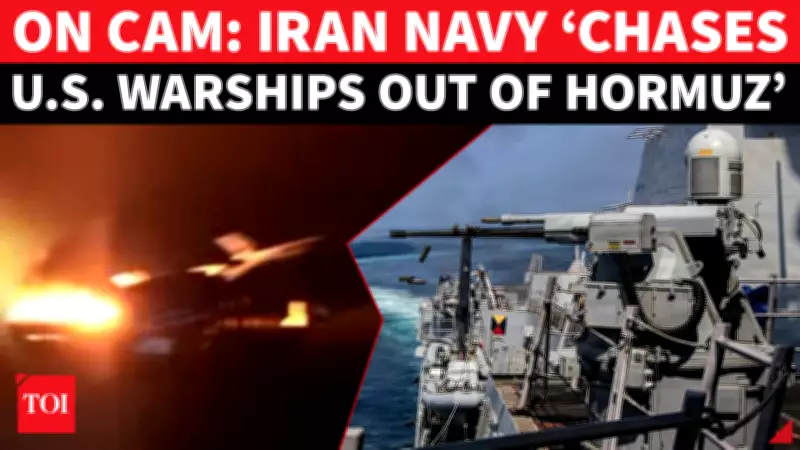
A dramatic confrontation erupted in the Strait of Hormuz on May 8, 2026, as Iran claimed its naval and missile forces struck American units, forcing a U.S. warship to flee after a reported attack on an Iranian oil tanker in the Gulf of Oman. The Islamic Revolutionary Guard Corps (IRGC) launched what Tehran described as a fiery retaliation, asserting that American assets were damaged and compelled to retreat from the strategic waterway.
Iran's Account of the Incident
Iranian officials stated that the U.S. Navy targeted an Iranian oil tanker in the Gulf of Oman, prompting an immediate response from the IRGC. According to Tehran, missile and naval forces engaged American vessels in the Strait of Hormuz, inflicting damage and forcing them to withdraw. The Iranian government warned of harsher retaliation against American bases if such attacks continue, raising the stakes in the ongoing standoff.
U.S. CENTCOM Denies Losses
The U.S. Central Command (CENTCOM) categorically denied any losses, describing its own strikes as defensive operations. CENTCOM maintained that no American warships were damaged and that the U.S. actions were aimed at protecting maritime security in the region. The Pentagon has not commented further on the specific claims of an Iranian tanker attack.

Escalating Tensions in the Gulf
The confrontation has heightened fears of a wider Gulf conflict, threatening global oil routes and maritime security in one of the world's most volatile strategic chokepoints. The Strait of Hormuz is a critical passage for approximately 20% of the world's oil supply, and any disruption could have severe economic repercussions. Both Iran and the United States have bolstered their military presence in the region, with Iran releasing videos of missile strikes targeting U.S. Navy destroyers and Trump confirming Iranian missile attacks while pleading for a deal to end the war.
Regional and International Reactions
Reports indicate that Saudi Arabia and Kuwait have opened bases for the U.S. military, drawing Gulf allies back into the conflict. Meanwhile, Iran has drawn a red line on Hormuz, demanding U.S. compensation before what it terms a 'war finale.' Hezbollah has also been involved, with a suicide drone striking an Israeli military vehicle. The situation remains fluid, with diplomatic efforts struggling to contain the escalation.
The crisis has also seen Iran and Saudi Arabia forming a secret alliance, with Araghchi and Al Saud holding talks on the Middle East, signaling a potential shift in regional dynamics. The international community watches closely as the standoff threatens to disrupt global oil supplies and ignite a broader conflict in the Persian Gulf.






