

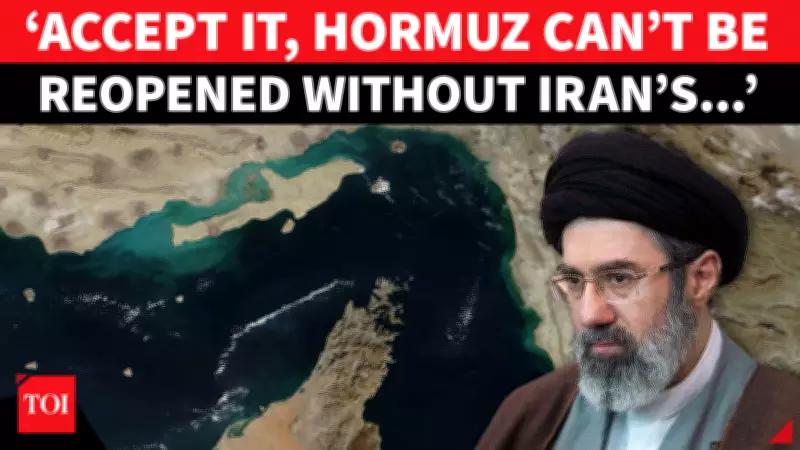
As tensions escalate across the Middle East, the Strait of Hormuz has once again become one of the world's most dangerous geopolitical flashpoints. A top Iranian lawmaker has declared that the critical waterway will never return to its previous state, asserting that no force can reopen it without Tehran's approval.
Iran's Stance on the Strait
Ebrahim Rezaei, the spokesperson for the national security and foreign policy committee of the Iranian parliament, issued a stark warning to the United States. He stated that Washington must either submit to Tehran's diplomacy and conditions or face the power of the Islamic Revolutionary Guard Corps (IRGC) and its missiles. This declaration has heightened fears of a global economic crisis reminiscent of the Great Depression, given that the Strait of Hormuz is a vital chokepoint for approximately 20% of the world's oil supply.
Geopolitical Implications
The closure of the Strait of Hormuz would have catastrophic effects on global energy markets, potentially triggering a severe recession. Oil prices could skyrocket, affecting economies worldwide. Iran's hardline stance suggests that it is willing to use this strategic leverage to extract concessions from the United States and its allies.

- The Strait of Hormuz is a narrow passage between Oman and Iran, connecting the Persian Gulf to the Gulf of Oman and the Arabian Sea.
- It is the most important oil transit chokepoint in the world, with about 17 million barrels of oil passing through daily.
- Any disruption could lead to supply shortages and price spikes, impacting global economic stability.
International Reactions
The international community has reacted with alarm to Iran's announcement. The United States has reiterated its commitment to ensuring freedom of navigation, while other nations have called for de-escalation. The United Nations has urged dialogue to prevent a potential catastrophe. However, Iran remains defiant, insisting that its demands must be met before any reopening of the strait is considered.
In related developments, reports have emerged of increased military activity in the region. The IRGC has conducted drills simulating the closure of the strait, while the US Navy has reinforced its presence in the Gulf. Analysts warn that any miscalculation could lead to a direct military confrontation.
Economic Fallout
Economists have drawn parallels to the 1973 oil crisis, which led to a global recession. A prolonged closure of the Strait of Hormuz could have even more severe consequences, given the current fragility of the global economy. Stock markets have already begun to react, with energy stocks surging and broader indices declining. Central banks are on alert, preparing measures to mitigate the impact.
Iran's move is seen as a high-stakes gamble to force the US to lift sanctions and recognize its regional influence. Whether this strategy will succeed remains uncertain, but the immediate outlook is grim for global economic stability.






