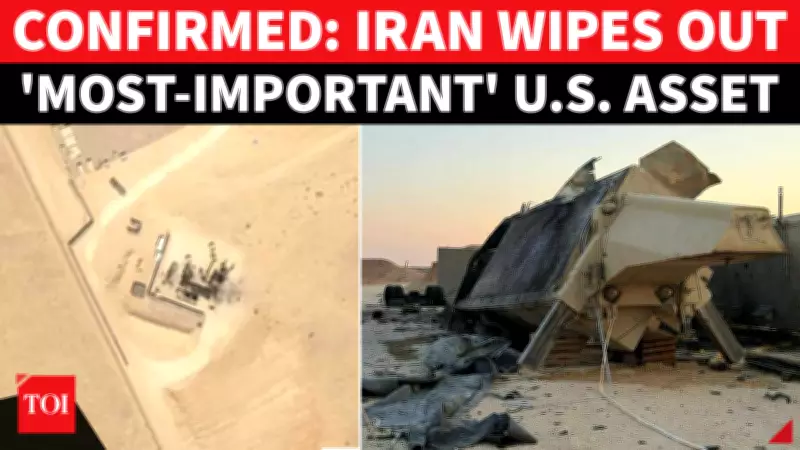
Iran Destroys Critical $300 Million U.S. Radar in Jordan Base Strike
Iran has reportedly delivered a significant blow to United States military capabilities in the Middle East by destroying a high-value American missile defense radar stationed in Jordan. According to a Bloomberg report citing a U.S. official, the targeted asset was a $300 million AN/TPY-2 radar, a crucial component of the Terminal High Altitude Area Defense (THAAD) system.
Strategic Impact on U.S. Air Defense Network
The destruction of this radar during the opening phase of the conflict represents a major setback for Washington's air-defense architecture in the Gulf region. The AN/TPY-2 radar provided essential tracking data to guide missile interceptors and detect incoming ballistic threats. Its loss forces a strategic recalibration of U.S. defensive posture.
Without this critical radar, interception duties now fall more heavily on MIM-104 Patriot Missile System batteries. This shift presents a considerable challenge, as these systems rely on PAC-3 missiles, which are already in limited supply. The degradation of layered defense capabilities increases vulnerability to aerial threats.

Satellite Imagery Confirms Destruction
Commercial satellite imagery analyzed by CNN shows the radar and its support equipment completely destroyed at the Muwaffaq Salti Air Base in Jordan. U.S. officials have subsequently confirmed the extensive damage to this strategic asset. The visual evidence corroborates the operational success of the Iranian strike.
Data compiled by the Foundation for Defense of Democracies indicates this was part of a broader Iranian offensive, with two separate strikes targeting sites in Jordan in late February and early March. This suggests a coordinated effort to degrade U.S. military infrastructure in the region.
Broader Regional Implications
The successful targeting of such a sophisticated and expensive piece of military hardware demonstrates Iran's evolving capabilities and strategic intent. The incident underscores the escalating tensions and the tangible costs of regional conflicts involving major powers.
The attack on the THAAD radar not only represents a substantial financial loss but also a tactical and symbolic victory for Iran, potentially altering the balance of power in ongoing regional confrontations. It highlights the vulnerability of even the most advanced military systems in modern asymmetric warfare scenarios.