

Iran Launches Major Missile Barrage Against Israeli and U.S. Targets
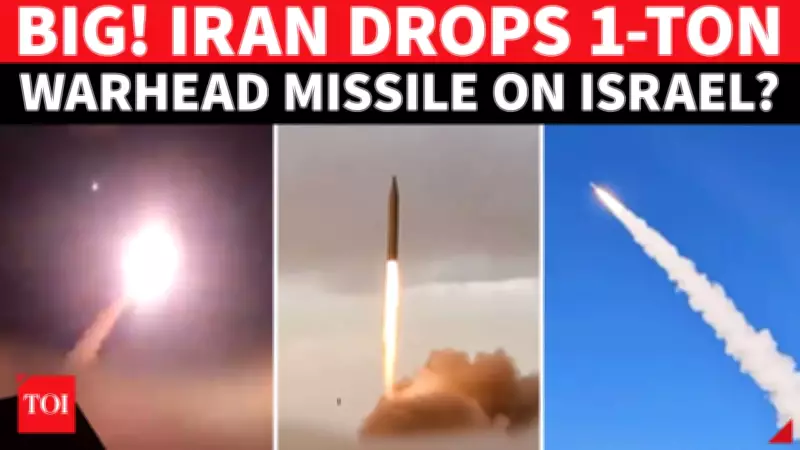
In a significant escalation of regional hostilities, Iran's Islamic Revolutionary Guard Corps (IRGC) has confirmed conducting a large-scale missile strike targeting areas in Israel, including Tel Aviv. The attack, described as part of the 33rd wave of the "True Promise-4" operation, involved the use of advanced solid-fuel Kheybar Shekan missiles equipped with one-ton warheads.
Details of the Missile Strike
The IRGC stated that more than ten missiles were fired from Iranian territory toward intended targets in Tel Aviv and other Israeli regions. According to the group, the projectiles successfully struck their objectives, which included what Iran claims are U.S. and Israeli military positions in the area. Notably, the IRGC alleged that one of the targets was a U.S. naval base, though this has not been independently verified by other sources at this time.
The use of one-ton warheads marks a concerning development in the conflict, as such payloads are capable of causing substantial damage and casualties. The Kheybar Shekan missiles, known for their solid-fuel technology, offer enhanced speed and maneuverability, potentially complicating defense systems.

Broader Regional Implications
This attack is part of a series of operations under Iran's "True Promise-4" campaign, which has seen multiple waves of strikes in recent times. The IRGC's actions are framed as retaliatory measures against perceived aggressions by Israel and the United States in the Middle East. The targeting of U.S. assets, such as the alleged naval base, underscores the widening scope of the conflict beyond Israeli borders.
Regional tensions have been simmering for months, with previous incidents including drone attacks and other military engagements involving Iranian proxies and allied forces. This latest missile barrage could signal a more direct and aggressive posture from Iran, raising fears of a broader regional war.
International Reactions and Context
While official responses from Israel and the United States are awaited, the strike has already sparked international concern. Analysts warn that such escalations could destabilize the already volatile Middle East, impacting global security and oil markets. The IRGC's claim of hitting a U.S. base adds a layer of complexity, potentially drawing American forces more directly into the conflict.
In related developments, recent reports have highlighted other incidents in the region, such as explosions at U.S. bases in Qatar and Kuwait, as well as drone attacks in Dubai. These events suggest a pattern of heightened military activity linked to the ongoing Iran-Israel tensions.
- The IRGC launched over 10 Kheybar Shekan missiles with one-ton warheads.
- Targets included Tel Aviv and alleged U.S. positions, including a naval base.
- This is the 33rd wave of Iran's "True Promise-4" operation.
- The strike raises risks of a broader regional conflict involving U.S. forces.
As the situation unfolds, global observers are closely monitoring for further developments and potential retaliatory actions. The use of heavy warheads in populated areas like Tel Aviv could have severe humanitarian consequences, adding urgency to calls for de-escalation and diplomatic solutions.






