

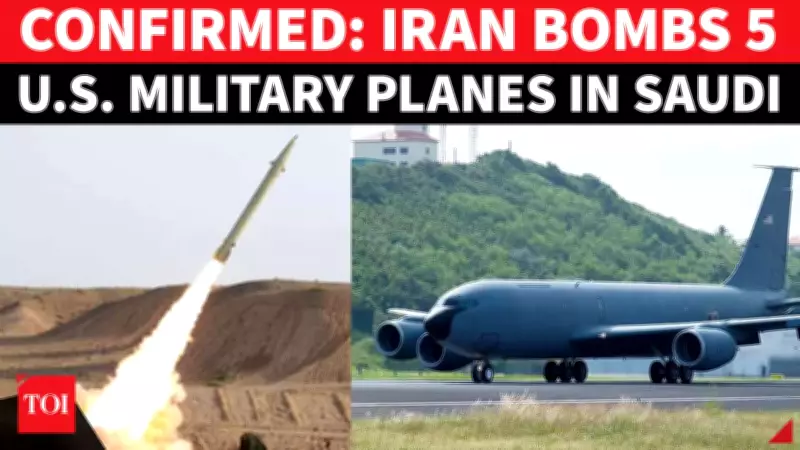
Iranian Forces Strike U.S. Military Assets in Saudi Arabia
In a significant military development, Iranian forces have successfully targeted and damaged five United States Air Force refueling aircraft during a missile strike on Prince Sultan Air Base in Saudi Arabia. According to a detailed report from The Wall Street Journal that cites confidential U.S. officials, this attack represents a notable escalation in regional tensions.
Details of the Attack and Aircraft Damage
The targeted aircraft were identified as Boeing KC-135 Stratotanker aerial refueling tankers, which were parked on the ground when the Iranian missiles struck. Officials confirmed that while the planes sustained considerable damage, they were not completely destroyed. Currently, all five KC-135 tankers are undergoing extensive repairs to restore their operational capabilities.
Fortunately, no American or allied personnel were killed during this missile strike, which occurred on March 14, 2026. However, the incident has immediately raised alarms within U.S. military circles about the security of critical assets stationed across the Middle East.

Strategic Implications for U.S. Air Operations
The KC-135 Stratotanker plays an indispensable role in American military strategy, particularly in sustaining prolonged air missions. These refueling tankers enable fighter jets and bombers to remain airborne for extended periods, which is crucial for operations across vast regions like the Middle East.
The damage to these five aircraft could potentially disrupt U.S. air operations, highlighting their vulnerability when stationed at forward bases. This attack underscores the growing capabilities of Iranian missile forces and their willingness to directly challenge U.S. military presence in the region.
Broader Regional Security Concerns
This strike comes amid escalating tensions between Iran and the United States, with previous incidents including threats to oil facilities and naval confrontations. The targeting of refueling tankers specifically suggests a strategic attempt to weaken U.S. air power projection capabilities.
Military analysts note that such attacks could force a reevaluation of base security protocols and asset deployment strategies. The incident at Prince Sultan Air Base serves as a stark reminder of the persistent threats facing American forces in volatile regions.
As repairs continue on the damaged KC-135 aircraft, U.S. officials are likely to implement enhanced defensive measures to protect against future missile strikes. The broader implications for Middle East stability and U.S.-Iran relations remain a subject of intense scrutiny and concern.






