

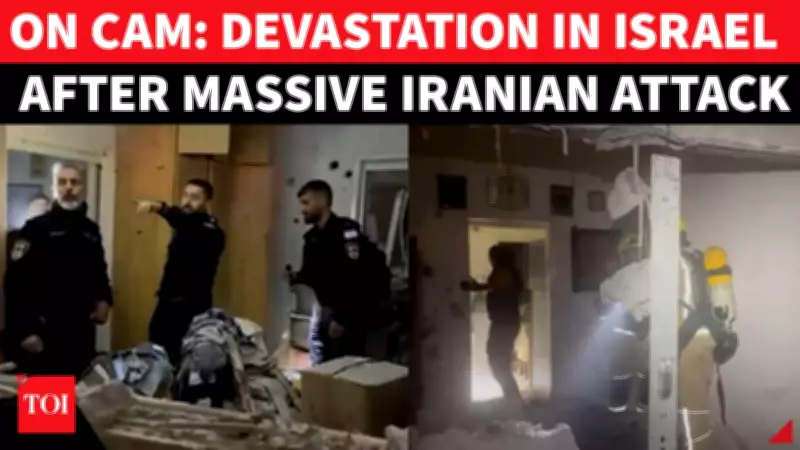
Iran Unleashes Massive Missile Barrage on Israel, Targeting Six Areas Including Tel Aviv
In a significant escalation of regional tensions, Iran executed a large-scale aerial assault on Israel this Saturday, deploying cluster missiles against several urban centers. The attack resulted in substantial damage to residential infrastructure, widespread power disruptions, and emergency responses across affected regions.
Multiple Cities Struck by Iranian Missiles
The Iranian offensive targeted six distinct Israeli areas, with confirmed impacts in major population hubs. Tel Aviv, Israel's economic and cultural heart, was among the cities reporting missile attacks, alongside Bnei Brak and Petah Tikva. The breadth of the assault underscores the coordinated nature of Iran's military operation.
Residential Damage and Infrastructure Disruption in Rosh Haayin
One of the most severely affected locations was Rosh Haayin, where Iranian missiles directly struck residential buildings. The impacts triggered fires and caused significant power cuts, leaving residents without electricity and forcing emergency evacuations. Local authorities are working to restore essential services while assessing the full extent of the structural damage.

Emergency Response and Casualty Reports
Israeli emergency teams were swiftly deployed across all affected areas to evaluate damage and provide assistance to residents. In Bnei Brak, at least one individual sustained injuries during the missile strikes. Emergency medical personnel treated the victim at the scene before transporting them to a nearby hospital for further care. The rapid response highlights the preparedness of Israeli civil defense units amid the crisis.
Context and Regional Implications
This aerial attack represents a notable intensification in the ongoing conflict between Iran and Israel, with the use of cluster missiles indicating a strategic shift towards more destructive weaponry. The targeting of civilian areas, including residential neighborhoods and power infrastructure, raises concerns about humanitarian impacts and potential retaliation. The situation remains fluid as both nations assess the aftermath and consider their next steps in this volatile geopolitical landscape.
As developments unfold, authorities continue to monitor the situation closely, urging residents in affected zones to follow safety protocols and stay informed through official channels.






