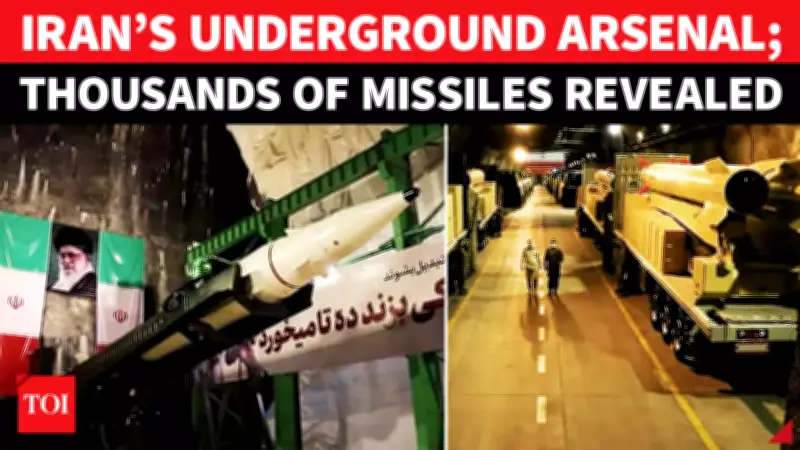
Iran Unveils Strategic Underground Missile City Ahead of Regional Conflicts
In a significant military revelation, Iran has publicly displayed what it describes as its most strategically vital underground missile city, a sprawling subterranean complex buried deep within the nation's rugged mountainous terrain. This disclosure comes before its recent conflicts with Israel and the United States, highlighting Tehran's efforts to enhance its defense posture.
Advanced Missile Systems on Display
State media footage captured the extensive facility, which houses thousands of advanced ballistic missiles. Among the showcased systems are the long-range Kheibar Shekan, Sejil, Emad, and Qadr missile systems. These assets are designed to significantly bolster Iran's strike capability and serve as a key deterrent against potential adversaries.
Iranian military officials have hailed this underground complex as a core pillar of the nation's defense network. They emphasized the hardened infrastructure and diverse missile arsenal, which includes various other systems not explicitly named in the footage. This showcase occurs at a time of escalating regional tensions, underscoring Iran's preparedness and strategic positioning.

Context and Implications
The revelation of the missile city is part of a broader pattern of military demonstrations by Iran, aimed at projecting strength and resilience. The timing, just prior to heightened conflicts, suggests a calculated move to signal capability and readiness to both allies and foes. The facility's location in mountainous areas adds a layer of protection, making it less vulnerable to external attacks.
This development has drawn attention from global observers, as it reflects Iran's ongoing investments in military technology and infrastructure. The advanced missile systems, particularly the long-range variants, could potentially alter regional power dynamics and influence diplomatic and military strategies in the Middle East.
As tensions continue to rise, the unveiling of this missile city serves as a stark reminder of the complex security landscape in the region. It highlights the importance of monitoring such military advancements and their implications for international relations and stability.