

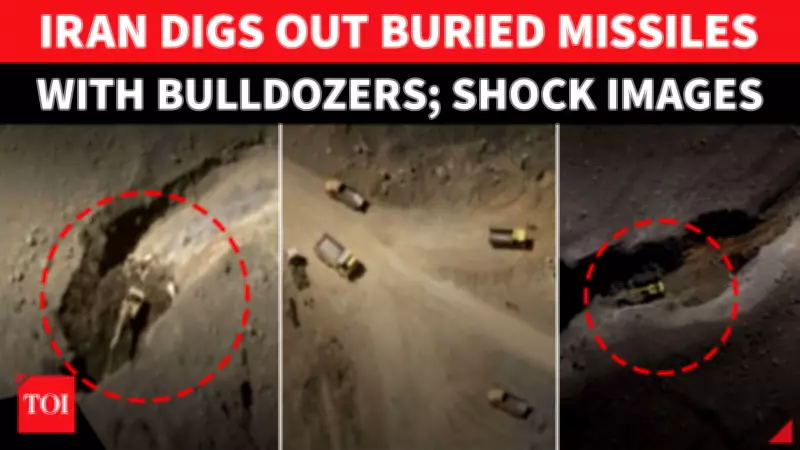
New satellite imagery is raising explosive questions about the effectiveness of the recent US-Israeli bombing campaign against Iran. According to a CNN report, dozens of underground missile tunnel entrances that were blocked during the strikes are already being cleared or repaired using bulldozers and dump trucks. Analysts suggest that many of Iran's missiles may not have been destroyed at all — only buried underground temporarily.
Satellite Evidence of Rapid Repairs
The images, captured over the past week, show construction equipment actively working at multiple sites across Iran. Bulldozers are seen removing debris and earth from tunnel entrances that were deliberately collapsed during the US-Israeli airstrikes. Dump trucks are hauling away rubble, indicating a coordinated effort to restore access to these hidden military facilities.
Implications for US-Israeli Strategy
The findings are fueling debate over whether Donald Trump's claims about crippling Iran's missile arsenal were exaggerated. During the bombing campaign, US officials stated that the strikes had successfully neutralized a significant portion of Iran's missile capabilities. However, the satellite evidence suggests that Tehran may have employed a deception tactic, temporarily burying missiles to protect them from attack.

Analysts point out that the rapid restoration of tunnel access could mean that Iran's missile force remains largely intact. This development undermines the narrative of a decisive blow and raises concerns about the long-term effectiveness of preemptive strikes against hardened underground facilities.
Regional and Global Reactions
The news has sparked mixed reactions internationally. Israeli defense officials have downplayed the satellite images, insisting that the bombing campaign achieved its primary objectives. Meanwhile, Iranian state media celebrated the repairs as a testament to the country's resilience and military ingenuity.
In Washington, the revelations have reignited political tensions. Critics of the Trump administration argue that the president exaggerated military successes for political gain. Supporters, however, maintain that the strikes significantly degraded Iran's ability to launch missiles in the short term.
Technical Analysis of the Tunnels
Experts in satellite imagery analysis have identified at least 15 distinct tunnel complexes that show signs of recent activity. The tunnels, some extending several kilometers, are believed to house mobile missile launchers and storage facilities. The use of bulldozers suggests that the entrances were not heavily damaged, allowing for relatively quick clearance.
This development highlights the challenges of neutralizing deeply buried military infrastructure. Unlike above-ground installations, underground tunnels require precise targeting and often multiple strikes to ensure destruction. Iran's investment in such facilities reflects a strategy of survivability and asymmetric warfare.
Future Implications
The activation of these secret tunnels could signal Iran's readiness to resume missile operations. This comes amid heightened tensions in the region, including recent incidents involving Iranian drones and US naval forces. The ability to rapidly restore missile capabilities may embolden Tehran in future confrontations.
For the US and Israel, the satellite images serve as a reminder of the limitations of air power alone. Military analysts suggest that a more comprehensive strategy, including ground operations or cyber attacks, may be necessary to permanently neutralize Iran's missile threat.






