

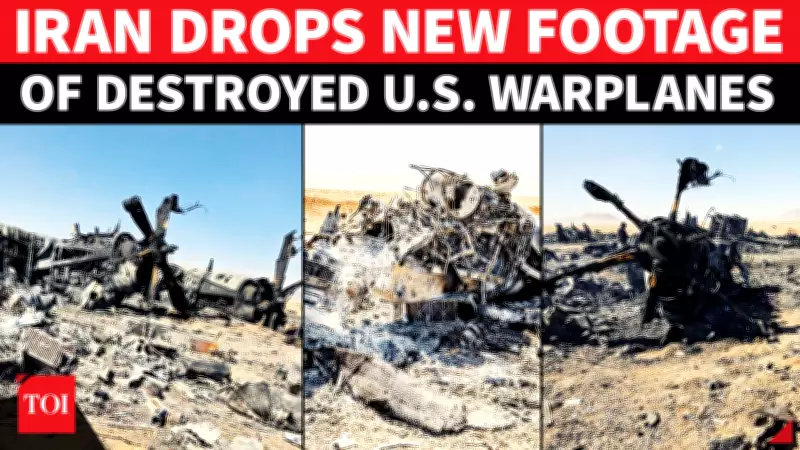
Iran Releases Shocking Footage of Destroyed US Aircraft
In a dramatic escalation of tensions, Iran has released exclusive images and footage claiming to show destroyed U.S. military aircraft, including Black Hawk helicopters and an F-15E Strike Eagle jet, following a high-risk rescue operation. The footage, which Tehran describes as evidence of significant U.S. losses, depicts the aircraft in charred and ruined states, highlighting the volatile situation in the region.
Details of the Alleged Destruction
According to Iranian sources, the destruction occurred during a mission to rescue a downed F-15E Strike Eagle. Tehran asserts that two C-130 transport planes and two Black Hawk helicopters were lost in the operation. The released footage shows the Black Hawk helicopters in what appears to be complete ruins, with debris scattered across the terrain, while the F-15 jet is visibly charred and damaged.
U.S. officials have provided a conflicting narrative, suggesting that some of the aircraft were intentionally destroyed by American forces to prevent them from falling into Iranian hands. This discrepancy in accounts underscores the ongoing propaganda war between Washington and Tehran, as both sides seek to control the narrative surrounding the daring mission.

Context of Rising Tensions
The release of this footage comes amid heightened tensions in the Middle East, particularly in the Gulf region. Recent events, including other alleged strikes and conflicts, have contributed to a climate of uncertainty and potential escalation. The images serve as a stark reminder of the risks involved in military operations in such a volatile area.
Experts note that such visual evidence is often used by nations to bolster their claims and influence public opinion internationally. In this case, Iran's decision to publicize the footage may be aimed at demonstrating its capability to inflict damage on U.S. assets, thereby strengthening its position in ongoing diplomatic and military standoffs.
Implications for US-Iran Relations
The conflicting reports over the aircraft destruction highlight the deep-seated mistrust between the United States and Iran. While U.S. sources emphasize the strategic decision to prevent capture, Iranian media portrays it as a significant blow to American military prowess. This incident could further complicate efforts to de-escalate tensions or engage in meaningful dialogue.
As both nations continue to navigate these challenges, the release of such footage is likely to fuel debates over military strategy, intelligence operations, and the broader geopolitical dynamics in the Middle East. Observers are closely watching for any official responses or additional evidence that might clarify the true extent of the losses and the circumstances surrounding the mission.






