

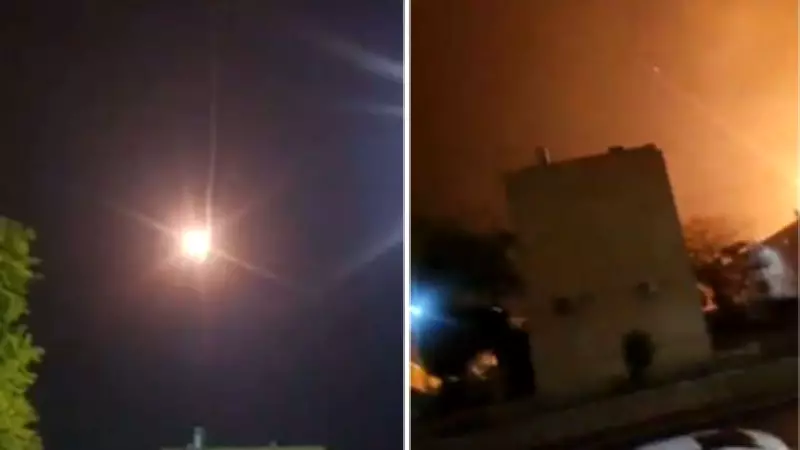
Iran Launches Missile Strikes on Dimona, Targeting Israeli Nuclear Facility
In a significant escalation of tensions in the Middle East, Iran's Islamic Revolutionary Guard Corps (IRGC) has claimed responsibility for launching missile strikes targeting Dimona, a city in southern Israel that is home to a major Israeli nuclear facility. The attack, which occurred on March 21, 2026, is being framed by Iran as a direct act of revenge for a previous assault on its own nuclear site in Natanz.
Details of the Attack and IRGC's Claims
The IRGC stated that the missile strikes were precisely aimed at Dimona, where Israel's nuclear research center is located. According to Iranian military sources, the operation was carried out using advanced ballistic missiles capable of evading Israeli defense systems. While initial reports from Israel indicate that the missiles were intercepted by the Iron Dome and other air defense mechanisms, some projectiles reportedly caused minor damage in the vicinity of the facility.
Iran has explicitly linked this attack to the Natanz incident, where its uranium enrichment plant was targeted in a sabotage operation widely attributed to Israel. The IRGC emphasized that this retaliation was a calculated response to what it describes as "acts of aggression" against its nuclear program, underscoring a tit-for-tat dynamic that risks spiraling into a larger confrontation.

Regional and International Reactions
The missile strikes have triggered alarm across the region and globally. Israeli officials have condemned the attack as a "provocative act of war" and are assessing the full extent of the damage. Prime Minister Benjamin Netanyahu convened an emergency security cabinet meeting, vowing a "swift and decisive" response to safeguard national security.
International observers, including the United Nations and key Western powers, have expressed deep concern over the escalation. The U.S. State Department issued a statement urging restraint from both sides, warning that such actions could destabilize the already volatile Middle East. Meanwhile, regional allies of Iran, such as Hezbollah in Lebanon, have voiced support for the strikes, highlighting the potential for broader proxy conflicts.
Background: The Natanz Attack and Escalating Tensions
The Natanz nuclear facility, a cornerstone of Iran's uranium enrichment efforts, was hit by a sophisticated cyber-physical attack earlier this year, resulting in significant damage to infrastructure. Although no group claimed responsibility, intelligence analysts and Iranian authorities have pointed fingers at Israel, citing a pattern of covert operations aimed at hindering Iran's nuclear ambitions.
This latest strike on Dimona marks a dangerous shift from covert actions to overt military engagements. The targeting of nuclear-related sites by both nations raises the stakes considerably, as it involves critical assets with strategic importance. Experts warn that such exchanges could inadvertently trigger a full-scale war, with catastrophic implications for regional stability and global security.
Implications for Nuclear Diplomacy and Security
The attack on Dimona comes at a time when diplomatic efforts to revive the Iran nuclear deal have stalled. The escalation threatens to derail any remaining prospects for negotiation, as trust between Tehran and Washington erodes further. Security analysts note that Iran's willingness to strike directly at Israeli nuclear infrastructure signals a bold new strategy, potentially emboldening other actors in the region.
Looking ahead, the situation remains highly fluid. Key points to monitor include:

- Israel's response: Whether it will opt for a measured retaliation or a more aggressive military campaign.
- International mediation: Efforts by the UN or other bodies to de-escalate tensions and prevent further strikes.
- Regional alliances: How neighboring countries and proxy groups might align or react in the coming days.
In summary, the Iranian missile strikes on Dimona represent a critical juncture in the long-standing shadow war between Iran and Israel. As both nations navigate this perilous escalation, the world watches with bated breath, hoping to avoid a conflict that could have far-reaching consequences beyond the Middle East.





