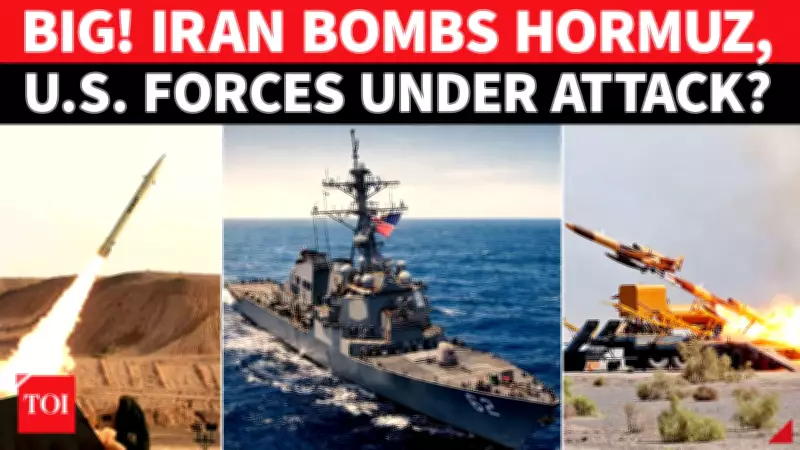
In a fresh escalation in the Gulf region, Iranian forces allegedly launched drones at the Strait of Hormuz. The U.S. military said it shot down four Iranian attack drones launched toward the global chokehold. In a statement on X, U.S. Central Command (CENTCOM) said the drones posed an “immediate threat” to regional maritime traffic and were intercepted moments after launch. CENTCOM added that U.S. forces subsequently struck Iranian coastal surveillance radar sites in Goruk and on Qeshm Island to prevent further attacks. The latest escalation comes a day after Iran claimed it had fired warning shots at U.S. destroyers operating near Iranian territory.
The Strait of Hormuz is a critical waterway through which about 20% of the world’s oil passes. Any disruption there can have severe impacts on global energy markets. The U.S. military’s swift response underscores its commitment to maintaining freedom of navigation in the region. The Iranian drone launch and the subsequent U.S. strikes mark a significant uptick in tensions between the two nations, which have been at odds for decades.
Background of the Conflict
Relations between Iran and the United States have been strained for years, with issues ranging from Iran’s nuclear program to its support for militant groups in the Middle East. The Gulf region has often been a flashpoint, with both sides conducting military exercises and patrols near each other’s territories. The recent incident is not an isolated event but part of a pattern of escalating confrontations.

Iran’s Alleged Warning Shots
Just a day before the drone incident, Iran claimed it had fired warning shots at U.S. destroyers operating near what it considers its territorial waters. The U.S. Navy denied any such encounter, stating that its ships were operating in international waters in accordance with international law. This contradictory narrative highlights the deep mistrust between the two countries.
U.S. Response and Strategic Implications
The U.S. military’s decision to strike Iranian radar sites is a clear message that it will not tolerate threats to maritime traffic. By targeting surveillance infrastructure, the U.S. aims to degrade Iran’s ability to monitor and potentially attack vessels in the strait. However, such actions risk further retaliation from Iran, potentially leading to a broader conflict. The international community has called for restraint on both sides to avoid a full-scale war that could destabilize the entire region.
Global Reaction
World leaders have expressed concern over the escalating situation. The United Nations has urged both parties to de-escalate and engage in dialogue. Oil prices have already seen a slight uptick due to the uncertainty, and analysts warn that a prolonged confrontation could lead to supply disruptions. The European Union has offered to mediate, but so far, neither Iran nor the U.S. has shown willingness to back down.
In summary, the drone attack and subsequent U.S. strikes represent a dangerous new chapter in the ongoing tensions in the Gulf. With both sides digging in, the possibility of further military engagements remains high. The world watches closely as events unfold, hoping for a diplomatic solution to prevent a wider conflict.