

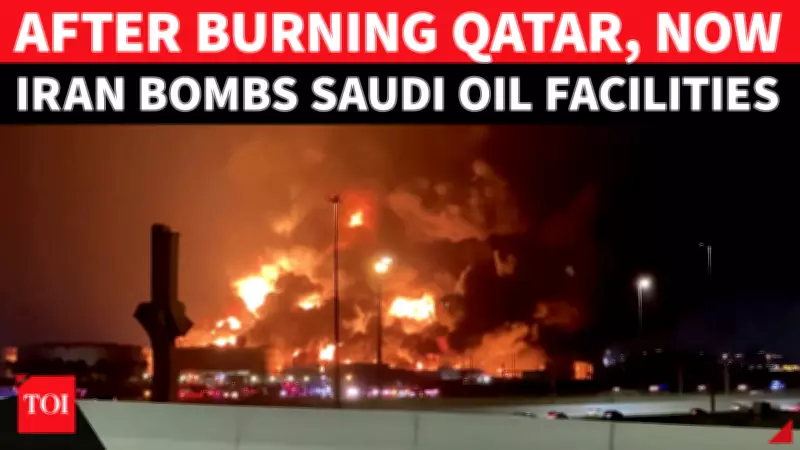
Iran Launches Retaliatory Strikes on Gulf Energy Infrastructure
In a dramatic escalation of regional hostilities, Iran has conducted direct missile strikes against critical energy facilities in Saudi Arabia and Qatar. This aggressive military action comes as a direct response to a recent attack by Israel on the South Pars gas field, which is a major Iranian asset. The strikes mark a significant intensification of the ongoing Middle East conflict, thrusting the Gulf region into a state of high alert and raising fears of a broader regional war.
Targets Hit: Saudi Refineries and Qatar's LNG Hub
According to reports, Iranian missiles struck key industrial zones in Riyadh, Saudi Arabia, targeting oil refineries and causing significant infrastructure damage. Explosions and massive fires were reported in the area, with emergency services scrambling to contain the blazes. Simultaneously, Qatar's Ras Laffan Industrial City, home to the world's largest liquefied natural gas (LNG) facility, was also attacked. Authorities confirmed "extensive damage" and fires at the site, which is crucial for global energy supplies.
Regional Reactions and Military Posturing
In the wake of the strikes, Saudi Arabia issued a stern warning, vowing not to succumb to pressure and reserving the right to respond militarily. The kingdom's air defenses were activated, intercepting incoming drones and missiles during the attack. Qatar condemned the strikes as a direct threat to regional stability and took the diplomatic step of expelling Iranian diplomats from the country. The Gulf Cooperation Council states have been placed on high alert, with military forces on standby and security measures heightened across the region.

Background and Escalating Tensions
The missile strikes follow Israel's attack on the South Pars gas field, a joint venture between Iran and Qatar that is one of the world's largest natural gas reserves. Iran's retaliation targets not only Saudi Arabia, a key regional rival, but also Qatar, which has maintained a more neutral stance in regional conflicts. This dual targeting suggests a strategic move to disrupt energy exports and exert pressure on Gulf states aligned with Western interests. The conflict has now expanded beyond the traditional Iran-Israel axis, drawing in multiple Gulf nations and threatening global energy security.
Implications for Global Energy Markets
The attacks on Saudi oil refineries and Qatar's LNG facility have immediate implications for global energy markets. Saudi Arabia is a leading oil exporter, and any disruption to its refining capacity could impact crude oil prices worldwide. Similarly, damage to Qatar's LNG infrastructure could affect natural gas supplies, particularly to Asian and European markets. Analysts warn that prolonged conflict in the region could lead to sustained volatility in energy prices, with potential economic repercussions globally.
International Concerns and Diplomatic Efforts
The international community has expressed deep concern over the escalation, with calls for restraint and diplomatic resolution. The United Nations and major powers are likely to engage in urgent diplomacy to prevent further hostilities. However, with both Iran and Saudi Arabia signaling readiness for military action, the situation remains precarious. The expulsion of Iranian diplomats by Qatar further complicates diplomatic channels, potentially isolating Iran regionally.
In summary, Iran's missile strikes on Saudi and Qatari energy facilities represent a dangerous new phase in the Middle East conflict, with direct attacks on critical infrastructure raising the stakes for all involved parties. The region now faces heightened military tensions and economic uncertainty, as global observers watch closely for further developments.






