

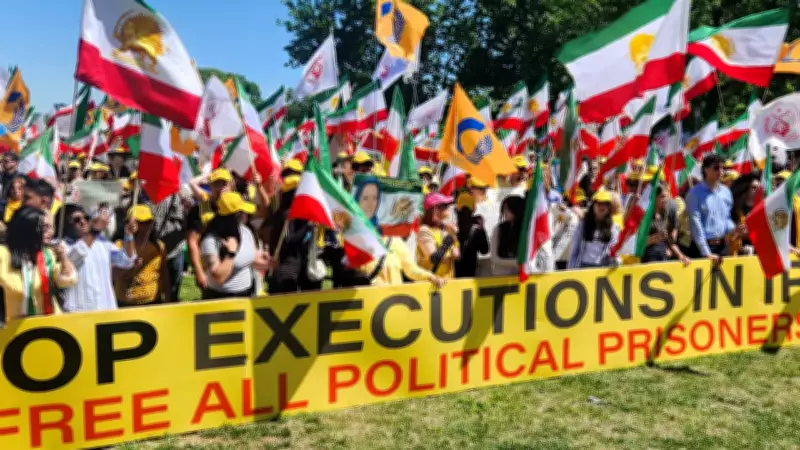
The Baha'i community in India has expressed deep distress over the ongoing war in Iran, which has led to an increase in the persecution of Iranian Baha'is. Many Indian Baha'is trace their origins to Iran and maintain family ties there. As the Islamic Republic regime intensifies its crackdown on internal opposition during the conflict, the country's largest non-Muslim minority has faced severe repercussions.
Historical Context of Persecution
Nilakshi Rajkhowa, representative of the Baha'i office of public affairs, explained that the persecution of Iranian Baha'is has a long history, becoming systematic state policy after the 1979 Islamic Revolution. She noted that during crises in Iran, Baha'is are often scapegoated. The Islamic Republic's constitution does not recognize the Baha'i faith, and a 1991 memorandum called for blocking the development of Baha'is from all sides.
Denial of Basic Rights
The Islamic Republic has consistently denied Baha'is fundamental rights, including access to education, government employment, and cemeteries for burial. During the latest conflict, dozens of Baha'is have been detained, charged, or prosecuted without due process. Among them are cousins Peyvand and Borna Naeimi.

According to Iran Human Rights, 30-year-old Peyvand was arrested on January 8 in Kerman. He was accused of encouraging Iranian youth to protest, denied legal representation, and reportedly subjected to torture, including mock executions. Borna was arrested on March 1 and similarly tortured. Under extreme duress, the cousins were forced to confess to killing three security personnel, as reported by the Baha'i International Community and Amnesty International.
Espionage Allegations
The most common accusation against Baha'is in Iran is espionage on behalf of Israel. Farah Motallebi, born and raised in Tehran, dismissed this as nonsense. She explained that the founder of the Baha'i faith, Baha'u'llah, was exiled in the 19th century and his final resting place is near Haifa in modern-day Israel. However, modern Israel did not exist at that time; the area was part of the Ottoman Empire. The regime uses this link to target Baha'is.
Motallebi shared a personal account: "Last July, my mother-in-law passed away in Shahrood in eastern Iran, where she was denied burial. We had to carry her body 300 km to another city for burial. This is the consistent persecution we have faced for 40 years."
Family Tribulations
Another Iranian-origin Indian Baha'i, who requested anonymity as Romina, detailed her family's suffering. "My sister was arrested and jailed with her one-month-old baby in 1980. She also had a two-year-old child at home, whom she had to leave alone. Her crime? Teaching children. The regime views Baha'is as ungodly and bars them from teaching, especially value education."
Motallebi added, "The regime recognizes Christianity, Judaism, and Zoroastrianism but not any faith that emerged after Islam. Baha'is are automatically excluded, making them easy scapegoats." Romina concluded, "Our faith teaches loyalty to the country and government of residence. Iranian Baha'is want to help Iran, but the regime does not see us as equal citizens."






