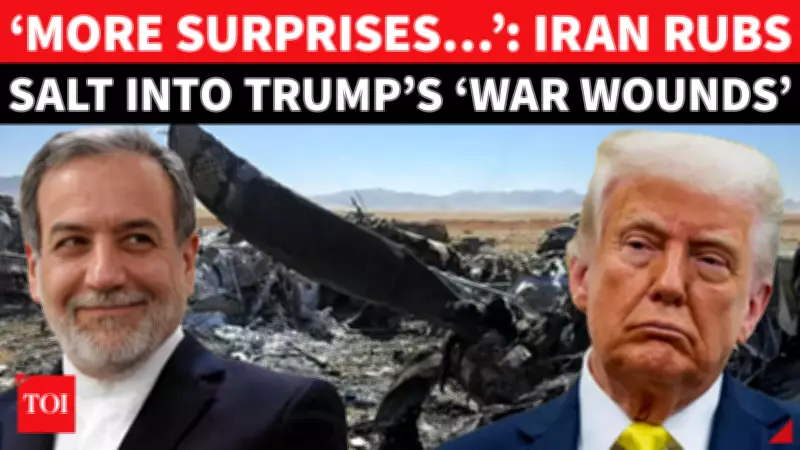
Iran has issued a chilling new warning to the United States after Foreign Minister Abbas Araghchi claimed Tehran has 'many more surprises' ready if Washington resumes military aggression. His remarks came after reports alleging massive U.S. aircraft losses during the recent conflict, including claims involving F-35 jets, drones, and surveillance aircraft.
Tehran Claims Massive US Losses
According to reports, Iran claims to have destroyed over 40 American aircraft during the recent conflict. The alleged losses include advanced F-35 fighter jets, various drones, and surveillance aircraft. Tehran says America suffered billions in damages while warning future confrontations could be even more devastating.
Escalating Rhetoric and Regional Tensions
The escalating rhetoric comes amid rising Gulf tensions, fears over the Strait of Hormuz, and growing pressure on global energy markets. Iran's Foreign Minister stated that the United States should not underestimate Iran's military capabilities and that Tehran has prepared multiple layers of defense and retaliation strategies.

Global Implications
The situation has drawn international concern, with energy markets particularly sensitive to any disruption in the Strait of Hormuz, a critical chokepoint for global oil shipments. Analysts warn that further escalation could lead to severe economic consequences worldwide.
Previous Incidents and Context
This is not the first time Iran has made such claims. In previous conflicts, Tehran has asserted significant successes against US and allied forces. However, independent verification of these claims remains difficult due to the fog of war and limited access to the region.
US Response and Next Steps
The United States has not officially confirmed the extent of aircraft losses. Pentagon officials have declined to comment on specific operational details, citing security concerns. However, the US has reinforced its naval presence in the Gulf region and continues to conduct patrols to ensure freedom of navigation.
As tensions remain high, the international community calls for restraint and diplomatic solutions to avoid a broader conflict that could destabilize the entire Middle East.