

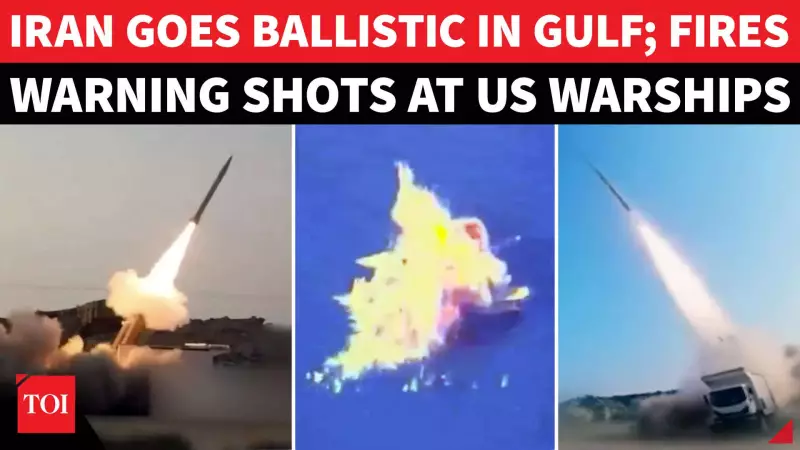
Iran's powerful Islamic Revolutionary Guard Corps (IRGC) has initiated a significant and provocative display of military force in the strategic waters of the Persian Gulf. The large-scale live-fire naval exercises, which commenced recently, are being interpreted as a direct and unambiguous warning to United States warships operating in the region. This show of strength comes merely months after a intense 12-day conflict between Iran and Israel, underscoring the continued volatility in the Middle East.
Scope and Scale of the Military Drills
The two-day war games, conducted by the IRGC's naval branch, were far from routine. They showcased a comprehensive array of Iran's military capabilities designed to project power and deter adversaries. The drills featured live launches of both ballistic and cruise missiles, demonstrating Tehran's long-range strike potential. Furthermore, the exercises integrated coordinated drone strikes, simulating swarm attacks on naval targets.
A notable aspect of the maneuvers was the use of advanced technology. The IRGC employed artificial intelligence for target tracking and identification, highlighting a move towards modern warfare tactics. The operations were carried out under simulated electronic warfare conditions, with full-scale air defence systems activated to practice repelling aerial threats. Iranian state media framed these exercises as a "decisive response" to any potential miscalculation by its enemies, while simultaneously sending a message of peace to neighbouring countries.

High Stakes in the World's Oil Chokepoint
The timing and location of these drills are critically important. They are taking place in and around the Strait of Hormuz, the world's most vital oil transit chokepoint. This narrow sea passage is a lifeline for global energy markets, with nearly 20% of all globally traded oil passing through it. Any military activity here immediately raises concerns about the security of shipping lanes and the potential for disruption to energy supplies, which would have worldwide economic repercussions.
The explicit warning to U.S. warships indicates that Tehran is prepared to directly challenge American naval presence in what it considers its backyard. This action significantly elevates the risk of a miscalculation or an accidental clash that could escalate rapidly. The regional tensions have remained high following the recent Iran-Israel conflict, and this powerful military display by the IRGC adds another layer of complexity to an already fraught security environment.
Implications for Regional and Global Security
The consequences of this military power show are multifaceted. Firstly, it serves as a stark reminder of Iran's growing arsenal of asymmetrical weapons, including drones and missiles, which it can deploy to threaten naval assets and commercial shipping. Secondly, it tests the resolve and response protocols of the United States Fifth Fleet, which is based in Bahrain and patrols these waters.
For India and other nations reliant on stable energy imports from the Gulf, the situation warrants close monitoring. Instability in the Strait of Hormuz directly impacts energy security and oil prices. The Iranian exercises underscore the fragile balance of power in the region and the constant potential for a localized incident to spark a broader confrontation. As the drills continue, the international community will be watching closely to see how the United States and its allies respond to this latest demonstration of force by the IRGC.






