

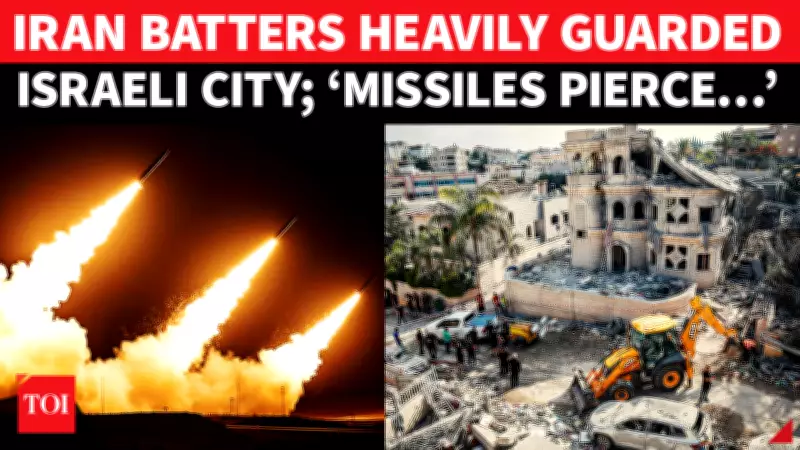
Iran's Revolutionary Guard Escalates Conflict with Major Multi-Front Strikes
In a significant escalation of regional tensions, Iran's Islamic Revolutionary Guard Corps has launched the 78th wave of Operation True Promise 4, targeting multiple strategic locations across Israel and US military bases in the Middle East. The coordinated attacks represent one of the most substantial military actions in the ongoing conflict, signaling a dangerous new phase in hostilities.
Targeted Cities and Military Installations
The IRGC specifically targeted three key Israeli cities: Dimona, home to Israel's nuclear research center; Tel Aviv, the country's economic and cultural hub; and Eilat, a strategic port city on the Red Sea. Additionally, the strikes extended to US military installations throughout the region, though specific bases were not named in initial reports.
Military analysts note that the inclusion of Dimona represents a particularly provocative move, as it targets one of Israel's most sensitive security sites. The renewed focus on this location suggests Iran is willing to escalate the conflict to unprecedented levels, potentially risking broader regional destabilization.

Weapon Systems and Tactical Approach
The attacks employed a combination of advanced weapon systems, including:
- Emad missile systems: Medium-range ballistic missiles capable of precision strikes
- Qadr missile systems: Long-range ballistic missiles with significant payload capacity
- Unmanned aerial vehicles (drones): For surveillance and targeted strikes
This multi-platform approach demonstrates the IRGC's evolving military capabilities and their willingness to deploy sophisticated weaponry in coordinated attacks. The simultaneous targeting of multiple locations across different fronts represents a complex operational strategy designed to overwhelm defensive systems.
Official Statements and Warnings
IRGC officials have characterized this latest wave of strikes as achieving a "distinct record" in the conflict, suggesting they view it as a milestone in their military campaign against Israel and US interests in the region. The language used indicates a sense of strategic accomplishment and confidence in their operational capabilities.
More concerningly, Iranian military leaders have issued explicit warnings about further strikes and referenced undeployed forces that remain available for future operations. This suggests the current escalation may represent only the beginning of a more sustained campaign, with additional military assets prepared for deployment if tensions continue to rise.
Regional Implications and Security Concerns
The timing and scale of these attacks have raised alarm among international observers and regional powers. The multi-front nature of the strikes demonstrates Iran's ability to coordinate complex military operations across significant geographical distances, challenging existing security architectures in the Middle East.
Security experts warn that targeting US military bases alongside Israeli cities represents a deliberate broadening of the conflict's scope, potentially drawing more international actors into the confrontation. The inclusion of American installations suggests Iran is willing to directly challenge US military presence in the region, not just Israeli security interests.
As tensions continue to mount, diplomatic channels appear increasingly strained, with little indication of immediate de-escalation. The situation remains fluid, with military analysts closely monitoring Iranian and Israeli responses to determine whether this represents a temporary spike in hostilities or the beginning of a more sustained conflict phase.






