Iran's Massive Missile Campaign Tests Gulf Defenses and US Stockpiles
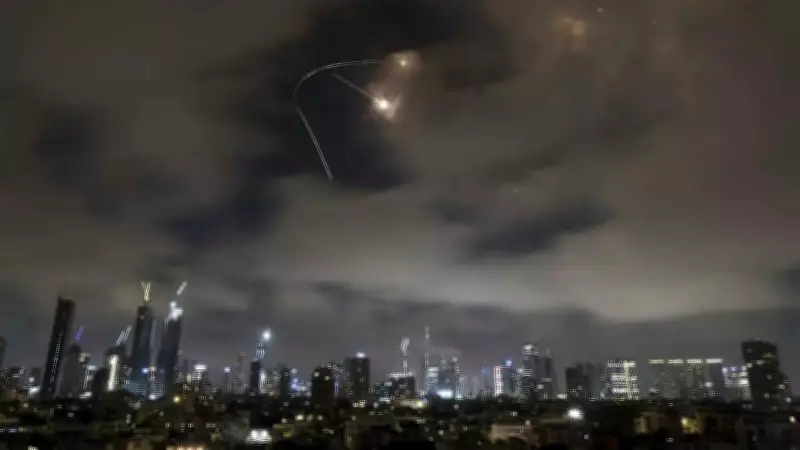
Despite continuous airstrikes from the United States and Israel, Iran has unleashed a formidable barrage of nearly 1,200 ballistic missiles and approximately 4,000 rudimentary Shahed cruise missiles targeting Gulf countries since the conflict began. These figures, drawn from official reports that are acknowledged as incomplete, highlight the scale of the assault.
Interceptor Shortages and Defense Doctrine Challenges
The ballistic missile defense strategy, which follows a shoot-shoot-look doctrine requiring at least two interceptors per target, has led to the firing of a minimum of 2,400 interceptors. In reality, this number is likely significantly higher due to the need for additional missiles to ensure successful defense against incoming projectiles. The vast majority of these interceptors have been Patriot PAC-3 and GEM-T missiles.
Critical stockpile data reveals a precarious situation: Gulf nations possessed fewer than 2,800 of these interceptors prior to the war, based on US Foreign Military Sales authorizations and expert estimates. While the US Department of Defense asserts it has sufficient munitions for its missions, FMS documents indicate that authorized numbers may not fully reflect actual deliveries.

Production Ramp-Ups and High-End Munitions Usage
Lockheed Martin Corp., the manufacturer, currently produces about 650 PAC-3 interceptors annually. However, a January agreement aims to increase this production to 2,000 per year by 2030. Similarly, the company's THAAD interceptor output, typically 96 per year, is set to rise to 400 under a separate deal.
The conflict has also seen extensive use of advanced US cruise missiles. According to an unnamed source familiar with the matter, the United States has launched hundreds of $2 million Tomahawk missiles and over 1,000 stealthier $1.5 million Joint Air-to-Surface Standoff Missiles (JASSMs). Although many strikes have shifted to cheaper Joint Direct Attack Munitions (JDAMs), cruise missiles remain heavily utilized due to the high-risk nature of Iran's airspace for close-in operations.
Pre-war US stockpiles included about 4,000 Tomahawks, with RTX Corp. producing roughly 100 annually. Government documents indicate Lockheed can manufacture a maximum of about 860 JASSMs this year. These long-range weapons are considered crucial for potential conflicts with advanced adversaries like China.
Strategic Implications and Global Alarm
"Allowing the high-end weapons to run down does suggest the US thinks it won't need to fight China or can win quickly," observed Peter Layton, a former Royal Australian Air Force officer and visiting fellow at the Griffith Asia Institute. "It is interesting strategically in that it suggests the Trump administration sees Iran as the most important issue and is willing to bet the farm on destroying it."
The depletion of munitions has alarmed US allies worldwide, as weapons systems and ammunition are redirected to support the campaign against Iran. The Pentagon is reportedly considering diverting weapons shipments originally intended for Ukraine to the Gulf region, including missile interceptors, as noted by the Washington Post.
Officials in Germany and France, which host two of Europe's most powerful militaries, have expressed concerns about supply strains for certain arms. Thomas Erndl, defense policy spokesperson for German Chancellor Friedrich Merz, stated, "A prolonged US involvement in the war in Iran would place a significant strain on the US military's stocks." This sentiment underscores growing international unease over the sustainability of current military engagements and their impact on global security preparedness.