

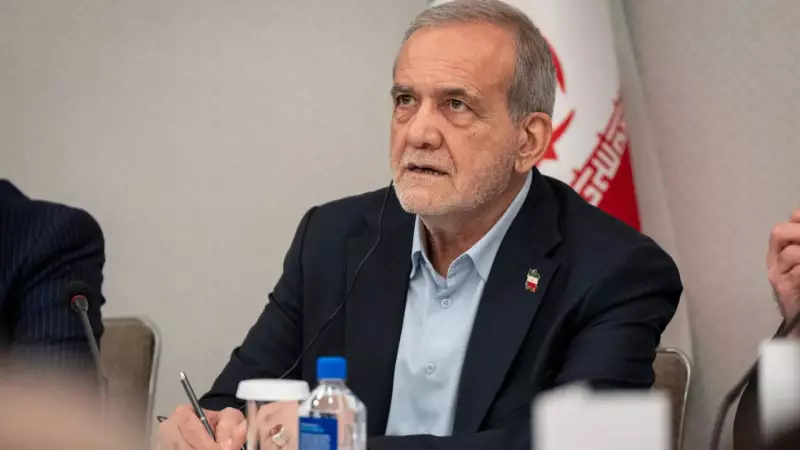
In a stark and forceful declaration, Iran's newly elected President, Masoud Pezeshkian, has stated that his nation is engaged in a "full-fledged war" with a coalition of Western powers. He directly named Israel, the United States, and Europe as the parties waging this conflict, aimed at preventing Iran from standing on its own feet.
A Declaration of Conflict and Readiness
President Pezeshkian made these grave comments during an interview published on the official website of Iran's Supreme Leader, Ayatollah Ali Khamenei, on Saturday. He asserted that despite facing numerous internal challenges, Iran's military forces are now stronger in terms of both equipment and manpower compared to when previous attacks occurred. "If they want to attack, they will naturally face a more decisive response," Pezeshkian warned, signalling Tehran's preparedness for escalation.
A War More Complex Than the Iran-Iraq Conflict
The Iranian leader framed the current confrontation as even more perilous than the devastating 1980-1988 war with Iraq, a conflict that resulted in over one million casualties on both sides. Pezeshkian described the West's campaign against Iran as "more complicated and more difficult," highlighting the multifaceted nature of the pressure, which includes military, economic, and diplomatic fronts.

His remarks arrive at a tense geopolitical moment, just ahead of a scheduled meeting between Israeli Prime Minister Benjamin Netanyahu and US President Donald Trump. They also follow significant military actions and diplomatic moves against Tehran over the past months.
Backdrop of Strikes and Sanctions
The president's statement references a series of aggressive exchanges. Six months ago, in June, Israel and the United States carried out coordinated strikes on Iranian territory. According to reports, this 12-day air war killed nearly 1,100 people in Iran, including senior military commanders and nuclear scientists. Iran's retaliatory missile strikes in response reportedly left 28 people dead in Israel.
The United States further intensified its involvement by conducting air strikes on three Iranian nuclear sites. This military escalation effectively halted nuclear negotiations that had begun in April, as cited by Al Jazeera.
On the diplomatic and economic front, European powers France, Germany, and the United Kingdom reimposed United Nations sanctions on Iran in September, citing concerns over Tehran's nuclear programme. Furthermore, since returning to office in January, US President Donald Trump has reinstated his "maximum pressure" policy against Iran, reviving a hardline approach from his previous term.
President Pezeshkian's interview thus serves as both a defiant internal message and a clear warning to external adversaries, framing Iran's current crises as an existential battle orchestrated by a united Western front.






